Can Bamboo Help Rehabilitate Mining Sites and Restore Ecosystems?
Mining is a significant industry, but the harsh and destructive processes generally have negative impacts on the environment and local communities. Many mining sites pollute waterways, damage ecosystems, and even cause health problems for people living nearby. While some mining companies are rehabilitating closed mines, and Australia requires contributions to rehabilitation funds, the true cost of restoration remains vastly underestimated. How do you prevent erosion and stabilise slopes, provide shade and help retain moisture in the soil, and provide food and shelter for wildlife while creating income for locals? This article explores how bamboo offers practical solutions to mining's environmental legacy.
Mining is a significant industry, but the harsh and destructive processes generally have negative impacts on the environment and local communities. Many mining sites pollute waterways, damage ecosystems, and even cause health problems for people living nearby. While some mining companies are rehabilitating closed mines, and Australia requires contributions to rehabilitation funds, the true cost of restoration remains vastly underestimated. How do you prevent erosion and stabilise slopes, provide shade and help retain moisture in the soil, and provide food and shelter for wildlife while creating income for locals? This article explores how bamboo offers practical solutions to mining's environmental legacy.
Environmental Impacts of Mining
Mining’s Aftermath
Advocates for Mine Rehabilitation
Bamboo in Mining Site Rehabilitation
Bamboo Creating Economic Opportunities in Rehabilitation
Bamboo for Regenerating Mining Sites
Mine Rehabilitation Benefiting Communities and Environments
Share this post:
Environmental Impacts of Mining
Mining’s Aftermath
Advocates for Mine Rehabilitation
Bamboo in Mining Site Rehabilitation
Bamboo Creating Economic Opportunities in Rehabilitation
Bamboo for Regenerating Mining Sites
Mine Rehabilitation Benefiting Communities and Environments
What Are the Environmental Impacts of Mining?
The environmental impacts of mining can have long-term effects on the biodiversity and health of ecosystems, destroying natural habitats and displacing wildlife. Understanding the scale and persistence of these impacts is essential for developing effective rehabilitation strategies that genuinely restore environmental and social value rather than merely satisfying minimum compliance requirements.
Mining Waste and Ecosystem Destruction
Between 1972 and 1989, the Panguna mine, developed and majority-owned by Anglo-Australian mining giant Rio Tinto, was one of the world's largest copper and gold mines. During this period, the company's subsidiary, Bougainville Copper Limited, discharged over a billion tonnes of mine waste into local river systems, devastating the environment and the health and livelihoods of local communities. Half the mountainside was obliterated during blasting to develop the pit, and around 220 hectares of surrounding tropical rainforest was poisoned with Agent Orange and then burnt, with around 18 million cubic metres of waste washed into the Kawerong River.
The waste rock and tailings from the mining operation choked the river system and altered the natural flow, with tailing overflow killing agricultural land and rainforest on either side of the river. Chemical pollution including copper, zinc, cadmium, and mercury wiped out fish populations in rivers and tributaries, destroying traditional sources of water, food, and building supplies. Local landowning clans were displaced by outside workers, severing cultural connections to land that had sustained communities for generations.
The Omai Gold Mine, a former open-pit gold mine located in Guyana, was one of the largest gold mines in South America. In 1995, a tailings dam at the mine failed, releasing approximately four billion litres of cyanide and heavy metal laden tailings into the Essequibo River and nearby creeks, causing significant environmental damage and affecting the livelihoods of thousands of people living between Omai and the Atlantic Ocean. After the mine closed in 2005, the government of Guyana and local communities reported that much of the environmental damage caused by the mine has not been fully addressed and that clean-up efforts have been inadequate.
Dust, Emissions, and Air Quality Degradation
Dust and emissions from mining operations can significantly impact air quality and harm human health. Mining leads to soil erosion, compaction, and nutrient depletion, making it difficult for plants and animals to survive in affected areas. The long-term health consequences for nearby communities include respiratory diseases, cardiovascular problems, and increased cancer risks from exposure to particulate matter and toxic metals.
In 1883, Charles Rasp, a boundary rider, identified a significant ore body laden with silver, lead, and zinc at Broken Hill. What followed became the birthplace of some of the world's largest mining conglomerates, including BHP in 1885 and Zinc Corporate Limited, later Rio Tinto Group, in 1905. A rapid influx of prospectors and subsequent mining operations drastically altered the natural contours and fluvial processes. Hard-hooved animals such as sheep, goats, and cattle decimated the soil structure, while rabbits stripped the earth bare and ate the seeds and seedlings that would have allowed revegetation in this semi-arid region.
What was once a mosaic of trees, shrubs, and groundcovers adapted to nutrient-poor and often dry conditions was devastated as timber was cleared for use by the mines, pumping stations, and local shopkeepers. The mining and smelting process releases pollutants into the air, which can cause respiratory problems and damage vegetation and wildlife for decades after operations cease.
Acid Mine Drainage and Water Contamination
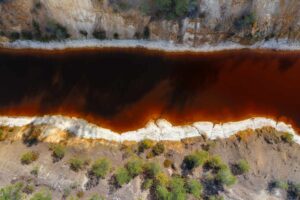
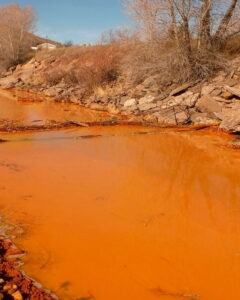
Acid Mine Drainage represents one of the most widespread and persistent forms of water pollution associated with mining. When sulfur-bearing minerals are exposed to water and air, they undergo a chemical reaction that produces sulfuric acid. As it leaches through mine waste, the acid liberates various metals from the rock, including arsenic, cadmium, mercury, lead, and zinc. These metals are highly toxic, with arsenic causing skin cancer and tumours, cadmium causing liver disease, and mercury causing nerve damage and growth retardation in children.
The acids and toxic metals can leach out of mine waste and contaminate nearby water sources, killing virtually all aquatic life and badly degrading downstream environments. In Broken Hill, the mining of lead and zinc has led to the generation of large amounts of waste rock and tailings that contain sulfur-bearing minerals, creating legacy contamination issues that persist long after mining operations have ceased.
Coal Mining and Particulate Pollution
Coal mining in Australia is a major industry, with the country being one of the world's largest exporters of coal. The main coal-producing states, Queensland and New South Wales, host mines that extract both thermal and coking coal. The Bowen Basin in Central Queensland and the Hunter Valley in New South Wales represent major coal-producing regions with significant environmental footprints.
Coal mining can have a range of negative environmental impacts, including those associated with the storage and management of coal mine tailings and coal stockpiles. While tailings are often contained in dams and treated to remove pollutants, stockpiles are subject to wind and rain erosion. The protection and coverage of stockpiles can be limited owing to extreme heights and structure, creating problems with dust control efficacy. Dislodgement of fines as a result of wind can transport dust particles long distances, triggering health and environmental hazards for communities within the vicinity of the source.
What Does Mining's Aftermath Look Like?
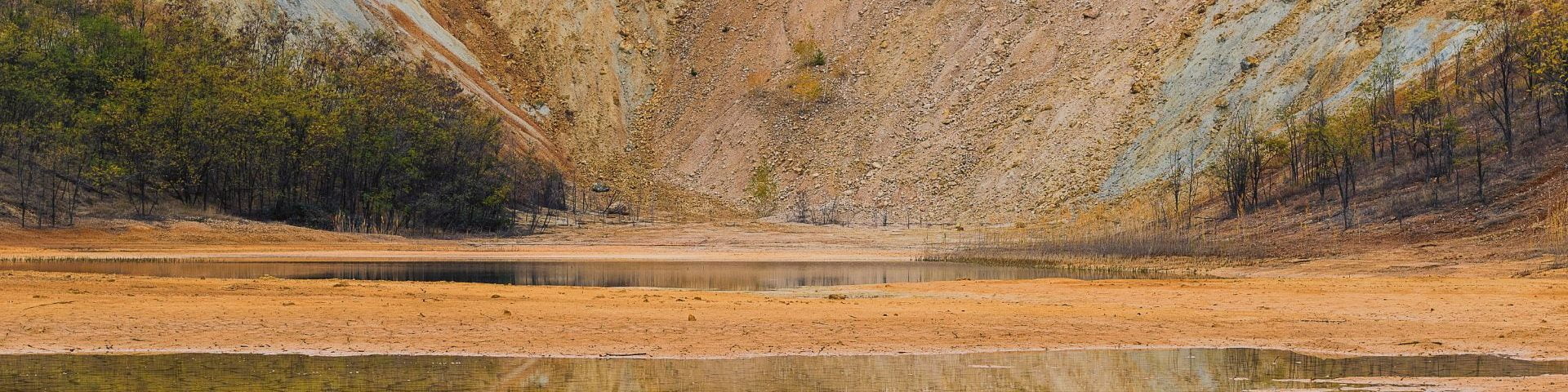
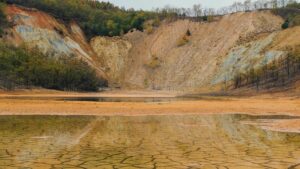
The aftermath of large-scale mining operations is generally a landscape of devastation: thousands of hectares of poisoned, rubble-strewn land drained by acidified streams that will likely remain too polluted to support their full complement of life for thousands of years to come. This stark reality confronts rehabilitation efforts with challenges far exceeding initial estimates and budgets.
Inadequate Financial Provisions
In many developing countries, the companies that have enriched themselves through this destruction are under no binding obligation to attempt to mitigate it. While wealthier countries attempt to avoid liability for eventual clean-up by ensuring mining companies set aside certain amounts upfront to cover expenses necessary to meet environmental standards, money for water treatment, tailings pond liners, and other remediation has thus far been underestimated by over $12 billion according to a 2003 estimate.
In 1992, the Canadian owner of the Summitville gold mine in Colorado, Galactic Resources, declared bankruptcy and walked away, sticking the US taxpayer with a $200 million reclamation bill. The 3,300-hectare mine had been leaking cyanide into the Alamosa River since its first week of operation and had destroyed 25 kilometres of river, having mined $130 million worth of metals.
In January 2000, at the Baia Mare mine in Romania, a tailings dam failed, releasing more than 100,000 tons of wastewater laden with cyanide and heavy metals into the Tisza River, making its way into the Danube, killing 1,240 tons of fish and contaminating the drinking water of 2.5 million people. Esmeralda Exploration, the Australian company holding a principal interest, went into a form of bankruptcy to protect its shareholders, but the citizens of affected countries received no such protection.
Who Is Pushing for Mine Rehabilitation?
There are a variety of stakeholders advocating for the rehabilitation of closed mines, each bringing different perspectives and priorities to the challenge. Environmental organisations such as Greenpeace, the Sierra Club, and the World Wildlife Fund are concerned about the environmental and social impacts of mining activities and push for rehabilitation as a way to mitigate these impacts.
Local communities and indigenous groups who live near closed mines are often directly affected by the environmental and social impacts of mining activities. They advocate for rehabilitation to protect their health and well-being and to restore the land and resources on which they depend. Their traditional knowledge of local ecosystems often provides invaluable insights into effective restoration approaches that imported expertise might overlook.
Governments have a responsibility to protect the health and well-being of their citizens, and many governments are pushing for the rehabilitation of closed mines to mitigate environmental and social impacts and to ensure that mining companies are held accountable for the consequences of their operations. International organisations such as the United Nations, the World Bank, and the International Council on Mining and Metals are also pushing for rehabilitation to promote sustainable development and ensure mining activities are conducted responsibly and accountably.
How Can Bamboo Help Rehabilitate Mining Sites?
Bamboo can help with a variety of rehabilitation activities, offering practical solutions to multiple environmental challenges simultaneously. Its unique combination of rapid growth, extensive root systems, and tolerance for degraded conditions makes it particularly valuable for mine site restoration where conventional revegetation approaches often fail.
Stabilising, Restoring, and Improving Soil Quality
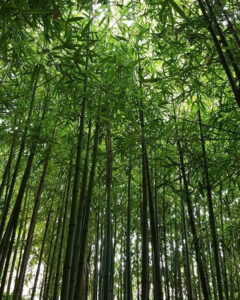
Bamboo's strong root structure and fast growth rate can help stabilise slopes on mine sites, preventing erosion and landslides that threaten water quality and downstream communities. Bamboo is a subfamily of grasses that can grow exponentially on degraded land, be managed without pesticides or fertiliser, and sequester significant amounts of carbon over short periods of time.
The qualities of bamboo that sometimes incite opposition, its rapid growth and dense root matrix, are exactly those characteristics that are essential for effective soil protection and conditioning. A rapid accumulation of biomass, evergreen canopy, ample ground litter, vigorous surface root extension, and general hardiness are mandatory for successful regeneration of severely degraded sites where few other plants can establish.
In Yunnan and Fujian provinces of southeast China, capital-intensive, professionally engineered river bank protection schemes proved less successful during extreme weather conditions than adjacent natural bamboo groves, prompting authorities there to speed up and extend their reafforestation programmes in water catchment and river systems. Similar experience in Japan has shown that even heavy flooding and damage caused by floating debris will not deter the rapid regrowth of bamboo. Indeed, flood-damaged areas responded with above-average growth in the following two seasons, demonstrating remarkable resilience.
Phytoremediation of Heavy Metals and Contaminants
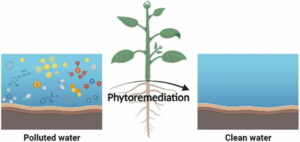
Phytoremediation is a low-cost technique with minimal environmental side effects which utilises plants to remove heavy metals from the environment to render them harmless. Copper and other heavy metals are highly toxic for normal plants; however, bamboo has been confirmed to have high tolerance to heavy metal concentration in hydroponics. Species with quick growth and high biomass production have a strong ability to adapt to different environments. Open clumping bamboo species have been recognised as potential phytoremediation material for heavy metal contaminated soils.
According to research funded by the European Commission, bamboo is effective in phytoremediating water. Phytoremediation processes use natural materials to absorb pollutants, making them distinct from processes that capture contaminants and dispose of them elsewhere. Bamboo has high water and nutrient usage and sees the effluent as liquid fertiliser, producing fantastic growth rates. As water passes through the plants, the bamboo roots act as a filter, drawing out toxins and impurities, thereby cleaning the water.
Bamboo could be regarded as an ideal plant for phytoremediation as it possesses an extensive root system and maximum production of biomass in the presence of high concentrations of heavy materials. Additionally, the application of bamboo biochar in mine-polluted soil has the potential to reduce the toxicity of heavy metals in the soil and enhance the growth of vegetation, creating synergistic benefits when combined with living bamboo plantings.
Ecosystem Restoration and Biodiversity Recovery
Bamboo can also help restore ecosystems on mine sites by providing food and shelter for a wide range of wildlife such as birds, mammals, insects, and reptiles. This can help create a diverse and thriving ecosystem on denuded mine sites where biological recovery would otherwise take decades. The structural complexity of bamboo groves, with multiple vertical layers and dense cover, creates microhabitats supporting diverse species assemblages.
Bamboo sequesters carbon by absorbing carbon dioxide from the atmosphere and storing it in its biomass, such as leaves, stems, and roots. Bamboo is known to have a high rate of photosynthesis, which locks away carbon in the plant and doesn't release it back into the atmosphere, thus sequestering carbon and improving the quality of the air. For mine sites seeking carbon offsets to balance operational emissions, bamboo plantations provide measurable carbon capture that can be certified and monetised.
Moisture Retention and Microclimate Improvement
Bamboo's large leaves can help retain soil moisture by providing shade and reducing evaporation. When the leaves of bamboo plants are fully expanded, they can cover up to 90% of the ground surface, which helps reduce the amount of sunlight that reaches the soil surface. This can help reduce evaporation, meaning that more water is available to be taken up by the roots of the plant and other plants nearby.
The leaves are also known for their waxy surface, which can help reduce water loss through transpiration, meaning more water is retained in the soil. When they fall to the ground, the litter helps improve the overall health of the soil by providing organic matter, making the soil more porous and better able to retain moisture. This improved soil structure supports establishment of other plant species, accelerating succession toward more diverse plant communities.
Dust and Emissions Control
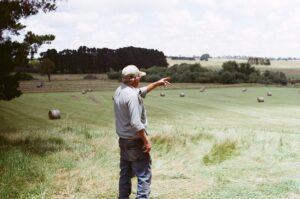
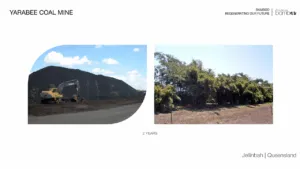
At the coal loading facility near Blackwater and Acland mines in Queensland, bamboo has been planted specifically for dust mitigation. Yarrabee Coal's environmental coordinator, Julian Power, approached Durnford Dart, partner in The Bamboo Choice, to evaluate the practicality of utilising bamboo to minimise coal dust drift from the Boonal coal loading facility located adjacent to the Capricorn Highway near Blackwater.
Bamboo was planted and reached high density within three years. It not only minimises dust drift but also filters debris, provides visual amenity, provides livestock fodder and mulch, and receives carbon credits. This Australian success story demonstrates bamboo's practical effectiveness in addressing one of mining's most persistent environmental challenges: controlling particulate emissions that affect air quality and community health.
Can Bamboo Create Economic Opportunities During Rehabilitation?
Bamboo can also be harvested and used for construction, paper production, and other commercial purposes, which can help create economic opportunities for local communities whose livelihoods may have been disrupted by mining activities. This economic dimension transforms rehabilitation from pure environmental cost into investment generating returns.
Bamboo is the fastest growing land plant in the world and is a viable replacement for wood. It can be harvested in three to five years, outyields pine six to one in biomass production, and there is a growing movement worldwide for organic and engineered bamboo products. The rapid harvest cycle means income streams begin much sooner than timber forestry, providing crucial economic support during the transition from mining-dependent to diversified local economies.
Bamboo can contribute to household income and rural livelihoods through carefully managed propagation and forestry techniques. Young shoots are a source of food, while more mature plants can be utilised as fibre for clothing, in concrete reinforcement, to provide livestock feed, or machined into numerous forms of lumber. It is also a clean source of charcoal for cooking stoves and, due to its lightweight nature, helps women participate in the village economy, giving them access to a potentially lucrative source of income.
Why Should Bamboo Be Used to Regenerate Mining Sites?
Bamboo is a highly sustainable crop that is well-suited for regenerating mining sites because it is a fast-growing, hardy plant that can tolerate a wide range of environmental conditions. Bamboo can quickly establish itself on a mining site, providing erosion control and helping to stabilise the soil within seasons rather than decades. Bamboo can be used for a variety of purposes, including construction, paper production, and biofuel production, providing multiple benefits to the local economy.
The advantage of bamboo is that it does not spread by uncontrollable seed dispersal, it cannot invade or block water channels, and is not poisonous to either native or domestic animals. Moreover, mature stands can be successfully and regularly cropped for economically valuable timber and for edible vegetable shoots without the slightest interruption of the solid binding role that stabilises soils and prevents erosion.
Bamboo is a hardy and resilient plant that requires minimal maintenance once established, and there are native species on every continent in the world. It can be used in a variety of different mine regeneration projects, from slope stabilisation to erosion control and phytoremediation, and can be grown in monoculture or mixed with other plants, depending on the specific needs of the site and the local ecosystem.
How Should Mine Rehabilitation Benefit Communities and Environments?
It is crucial that greening of existing mines and rehabilitation of closed mines is done in a way that benefits local communities and the environment. Not only does the landscape and habitat need to be considered but also the needs and aspirations of local communities whose lives have been shaped, often negatively, by mining operations. Effective rehabilitation creates opportunities for community participation, skill development, and long-term economic sustainability rather than simply applying technical fixes that leave communities marginalised.
We already have a success story here in Australia, demonstrated at the Queensland coal facilities, which shows bamboo's potential as a cost-effective and sustainable solution for mine site greening. As the global demand for sustainable mining practices increases, bamboo should become an increasingly popular choice for mine operators looking to rehabilitate and restore mined areas while generating measurable environmental and social benefits.
The future of mine rehabilitation lies in approaches that don't merely minimise harm but actively restore ecological function and community well-being. Bamboo, with its unique combination of environmental remediation capabilities and economic potential, offers a pathway toward rehabilitation that genuinely serves both ecological restoration and community development objectives. For mining companies, governments, and communities grappling with the legacy of past operations, bamboo represents a practical, proven solution that transforms devastation into opportunity.
To explore how bamboo can support environmental restoration projects, whether at mine sites or other degraded landscapes, contact our team for consultation on species selection, planting strategies, and long-term management approaches. Our experience with bamboo across diverse Australian conditions informs practical recommendations that balance environmental objectives with economic realities.
Would you like to find out which product will meet your expectations?