House of Bamboo Wins 2025 SIM-PAC Sustainability Award
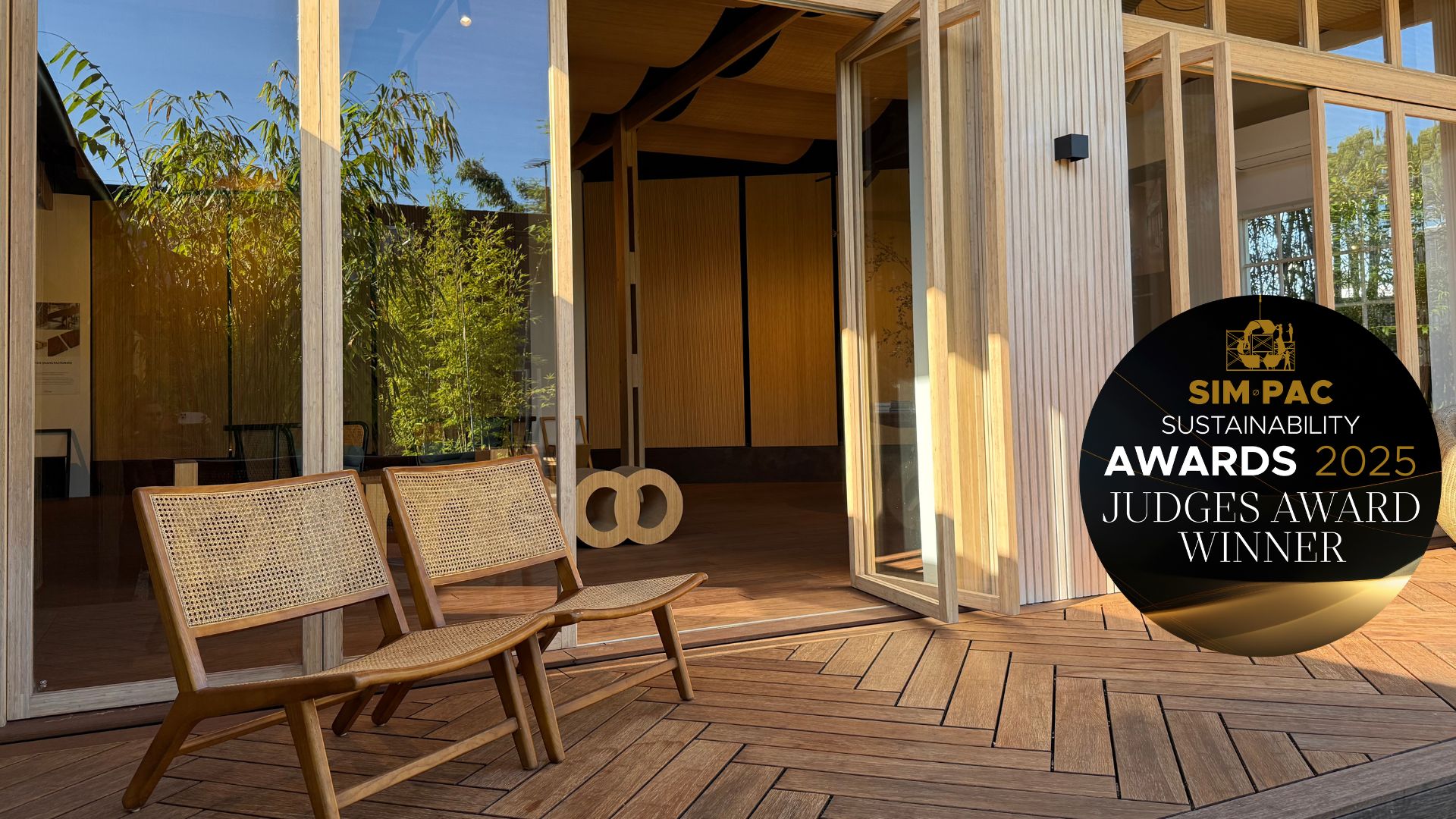
The 2025 SIM-PAC Sustainability Awards have recognised House of Bamboo with a Judge Commendation Award in the Lifecycle Design category, affirming our commitment to engineered bamboo systems and circular material innovation. This achievement reflects years of dedication to sustainable building practices and positions bamboo as a vital material in Australia's transition toward regenerative construction.
The 2025 SIM-PAC Sustainability Awards have recognised House of Bamboo with a Judge Commendation Award in the Lifecycle Design category, affirming our commitment to engineered bamboo systems and circular material innovation. This achievement reflects years of dedication to sustainable building practices and positions bamboo as a vital material in Australia's transition toward regenerative construction.
Engineered Bamboo Rivaling High-Carbon Material Performance
Engineered Bamboo’s Real-World Impact
Award’s Impact on Sustainable Building in Australia
Getting Started with Engineered Bamboo for Architects and Designers
Conclusion
What Are the SIM-PAC Sustainability Awards?
The SIM-PAC Live Sustainability Awards represent one of the Asia-Pacific region's most respected platforms for recognising innovation in sustainable manufacturing and low-carbon materials. Held annually, this event brings together leaders from construction, engineering, product development, and materials science to celebrate solutions advancing net-zero goals. With 23 award categories spanning Lifecycle Design, Circular Manufacturing, Low Carbon Innovation, and Sustainable Materials, the awards highlight measurable progress toward regenerative industry practices.
For House of Bamboo, this first-time nomination and subsequent recognition validates our approach to circular design and engineered bamboo systems. The Judge Commendation Award acknowledges not just the material itself, but the comprehensive ecosystem we've built around responsible sourcing, precision manufacturing, and adaptive applications. This recognition places Australian innovation on the international stage, demonstrating that local expertise in sustainable materials can compete with global leaders in the field.
Why Did House of Bamboo Receive the Lifecycle Design Award?
CEO Jennifer Snyders accepted the award on behalf of our team, representing years of collaborative work with architects, engineers, and designers across Australia. This recognition reflects our commitment to three core principles: circular design, environmentally responsible production, and engineered bamboo systems that deliver durable, low-carbon construction outcomes.
"This award reflects our belief that sustainable materials must perform, endure, and inspire," Jennifer noted during the ceremony. "Engineered bamboo enables architects and designers to build responsibly without compromising beauty or technical excellence."
The Lifecycle Design category specifically evaluates materials and systems based on their entire journey, from responsible sourcing through manufacturing, installation, maintenance, potential reuse, and end-of-life recovery. Engineered bamboo excels across every stage of this cycle, offering architects a material that genuinely supports regenerative design principles rather than simply reducing harm. The judges recognised that our approach goes beyond offering sustainable products; we've created systems that enable circular construction practices throughout the building lifecycle.
How Does Engineered Bamboo Support Circular Design Principles?
Modern architecture demands materials that perform throughout their complete lifecycle, and engineered bamboo uniquely meets these requirements through several interconnected characteristics. The circular economy model requires us to rethink materials not as consumables but as resources that flow through multiple use cycles, maintaining their value and utility.
Renewable Raw Material with Rapid Regrowth
Bamboo reaches harvestable maturity in three to five years, compared to 25 to 70 years for traditional hardwoods. This rapid growth cycle creates a continuously renewable resource base that can meet construction industry demands without depleting natural forests. When harvested properly, bamboo groves regenerate from their existing root systems, eliminating the need for replanting and maintaining soil stability.
The plant's prolific growth also means it sequesters carbon at rates significantly higher than most tree species, with some varieties capturing up to four times more carbon dioxide than equivalent stands of hardwood trees. For projects pursuing carbon-neutral or carbon-negative outcomes, bamboo's natural carbon capture provides measurable environmental benefits before manufacturing even begins.
Low-Carbon Production and FSC Certification
Our engineered bamboo undergoes precision lamination and layering techniques that transform raw culms into stable, high-performance building materials. These manufacturing processes consume substantially less energy than steel, concrete, or aluminium production, with carbon footprints often 50-80% lower than comparable conventional materials.
FSC-certified supply chain assurance means every product can be traced back to responsibly managed sources. For architects specifying materials for green building certification, this transparency provides the documentation needed for LEED, Green Star, or other rating systems. The certification process verifies not just environmental claims but also social responsibility throughout the supply chain.
Design for Disassembly and Adaptive Reuse
One of engineered bamboo's most significant lifecycle advantages is its compatibility with modular design principles. Our SeaChange Series and Symphony Series products can be installed using systems that allow for future disassembly and reuse, transforming buildings from static, single-use structures into adaptable resources.
When a space needs renovation or repurposing, bamboo components can be carefully removed, refinished if necessary, and reinstalled in new configurations. This extends material lifespan dramatically and reduces construction waste, which currently accounts for approximately 40% of all waste sent to Australian landfills. Projects like the Clarke & Humel Office demonstrate how thoughtfully detailed bamboo systems can be both beautiful and practically reversible.
Reduced Waste Across Manufacturing and Installation
Engineered bamboo's consistent dimensions and modular nature minimise cutting waste during installation. Prefabrication capabilities mean much of the fabrication work occurs in controlled factory environments, where material efficiency reaches its highest levels and waste streams can be properly managed.
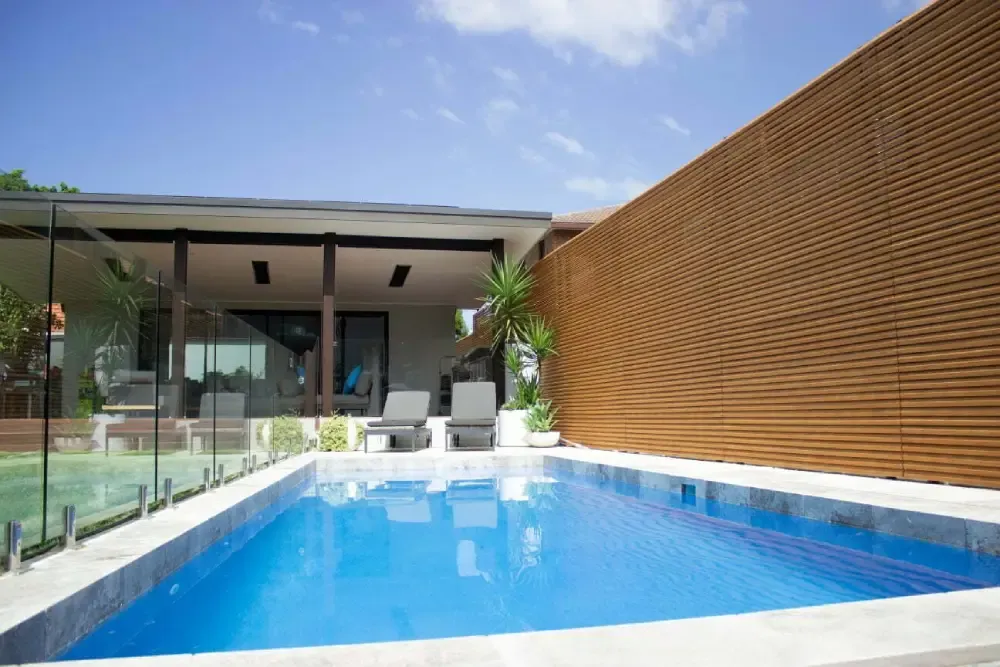
For landscape applications like fencing and screening, products like Natureed and bamboo poles integrate seamlessly into existing ecosystems while requiring minimal processing. Their natural aesthetic requires minimal finishing, reducing the need for paints, stains, or chemical treatments that add environmental burden.
What Makes Engineered Bamboo's Performance Rival High-Carbon Materials?
Sustainability means nothing if materials don't perform. The construction industry has historically viewed sustainable materials with scepticism, often associating environmental credentials with compromised performance. Engineered bamboo challenges these assumptions directly, delivering technical specifications that match or exceed traditional building materials across multiple critical metrics.
Structural Strength and Dimensional Stability
Through precision layering and lamination, engineered bamboo achieves remarkable structural capabilities. The manufacturing process aligns bamboo fibres in optimal configurations, creating products with high tensile strength and compressive resistance that rival many hardwoods. In comparative testing, properly engineered bamboo demonstrates strength-to-weight ratios exceeding many hardwoods, making it particularly valuable in applications where material weight matters.
This structural performance makes bamboo suitable for load-bearing applications, from flooring and decking to beams and structural elements. The consistent fiber orientation achieved through manufacturing eliminates many of the unpredictable weakness zones found in natural timber, where knots and grain irregularities create structural uncertainties.
Climate Resilience and Movement Resistance
Australia's variable climate poses significant challenges for any building material. Engineered bamboo products undergo treatments that enhance dimensional stability, reducing the expansion, contraction, warping, and cupping that plague lesser materials. The lamination process itself contributes to stability by creating cross-layered structures that resist unidirectional movement.
For exterior applications like facades, walls, and cladding, this stability ensures long-term performance without excessive maintenance. Our SeaChange Series specifically addresses the demands of coastal environments, where salt exposure, UV radiation, and moisture cycling create particularly harsh conditions. Projects along the Australian coastline demonstrate bamboo's ability to weather gracefully while maintaining structural integrity over extended service lives.
Where Is Engineered Bamboo Making Real-World Impact?
The true test of any material lies in its real-world performance across diverse applications. Engineered bamboo has proven its versatility and lifecycle advantages in projects throughout Australia and the Asia-Pacific region.
Façade Systems and External Cladding
Modern façades must balance aesthetic appeal, weather resistance, thermal performance, and maintenance requirements. Engineered bamboo addresses all these concerns while adding the warmth and biophilic qualities of natural materials. Projects like the Clarke & Humel Office in Manly demonstrate how SeaChange Series battens create sophisticated exterior cladding that weathers beautifully over time. The modular installation allows for individual component replacement if needed, extending the façade's functional lifespan indefinitely.
The First Building showcases how engineered bamboo can anchor major architectural statements while maintaining environmental responsibility. The interplay of vertical bamboo elements with glazing creates depth and texture that photographs beautifully while performing exceptionally in real-world conditions.
Interior Architecture and Acoustic Applications
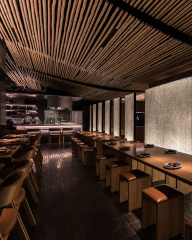
Inside buildings, engineered bamboo contributes to biophilic design principles by bringing natural materials into occupied spaces. Research consistently demonstrates that natural materials improve occupant wellbeing, reduce stress, and enhance productivity. Acoustic panels fabricated from engineered bamboo address sound management needs in restaurants, offices, hotels, and institutional spaces.
The Shaw Auditorium exemplifies how bamboo can meet demanding acoustic requirements in performance venues while creating visually stunning ceiling treatments. Rattan and cane webbing applications, as seen in projects like the Ace Hotel and multiple Woolworths locations, demonstrate bamboo's adaptability to diverse design vocabularies. From minimalist contemporary interiors to spaces celebrating craft traditions, bamboo materials respond to varied aesthetic directions.
Hospitality and Commercial Applications
The hospitality sector increasingly recognises that sustainable design enhances guest experience and brand perception. The Shack Beach Hotel illustrates how bamboo can anchor a coastal hospitality project's material palette, creating spaces that feel relaxed yet refined. The Australian Arms Hotel demonstrates bamboo's versatility across different hospitality contexts, from public bars to intimate dining areas.
Retail environments also benefit from bamboo's aesthetic qualities and sustainability credentials. Multiple Woolworths locations have integrated engineered bamboo into their renovated stores, signalling environmental commitments to customers while creating more pleasant shopping environments.
Landscape Architecture and Outdoor Structures
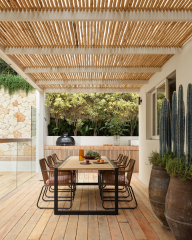
The intersection of architecture and landscape design presents unique opportunities for sustainable materials. Bamboo fencing and screening products provide privacy, wind protection, and visual interest while supporting ecological principles. Rod screens and Natureed fencing systems create boundaries that feel organic rather than imposed, aging gracefully and developing character over time.
For outdoor flooring applications, bamboo decking delivers durability comparable to tropical hardwoods without the ethical and environmental concerns. Projects across coastal regions demonstrate bamboo decking's resilience in high-moisture, high-UV environments.
What Does This Award Mean for Sustainable Building in Australia?
The SIM-PAC Judge Commendation Award represents more than recognition for House of Bamboo. It signals a broader industry shift toward regenerative materials and circular design thinking. Australia's construction sector faces increasing pressure to reduce carbon emissions and material waste through government policies, corporate sustainability commitments, and consumer expectations.
Engineered bamboo provides a practical response to these demands. It's a proven material system delivering measurable environmental benefits while meeting the performance standards that architects and builders require. This award validates the work our team has invested in developing Australian markets for engineered bamboo and acknowledges the collaborative relationships we've built with design professionals.
How Can Architects and Designers Get Started with Engineered Bamboo?
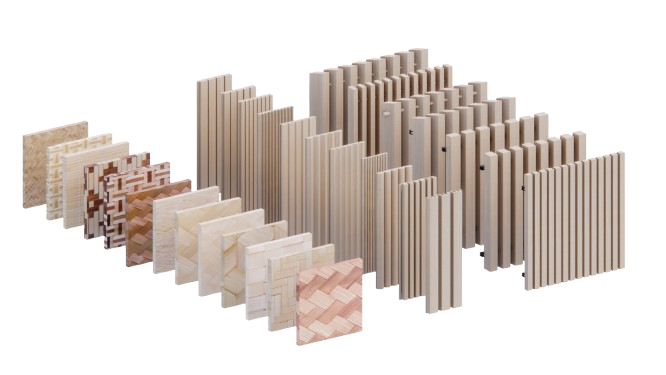
For architects, designers, and builders ready to explore bamboo's potential, House of Bamboo offers multiple pathways to engagement. Begin by browsing our applications pages to see how bamboo performs in contexts similar to your project. Facade systems, interior cladding, acoustic treatments, flooring, and fencing applications demonstrate the material's versatility.
Review our projects gallery to understand real-world performance and design possibilities. These completed projects show how other design professionals have successfully integrated bamboo across diverse building types and budgets. Order samples to experience the materials firsthand, as physical samples reveal the textures, colours, and tactile qualities that specifications alone cannot communicate.
Contact our technical team to discuss specific project requirements. We provide feasibility guidance, technical data, specification assistance, and connection to fabricators and installers experienced with bamboo systems. For architects seeking deeper understanding, our CPD training sessions offer opportunities to explore bamboo materials and circular design principles in detail.
Building a Regenerative Future with Bamboo
The 2025 SIM-PAC Sustainability Awards Judge Commendation recognises House of Bamboo's leadership in engineered bamboo and circular design. More significantly, it signals that renewable alternatives are ready for mainstream architectural practice. Engineered bamboo offers architects, designers, and builders a practical path toward regenerative construction, delivering the performance, aesthetics, and durability that projects demand while dramatically reducing environmental impact.
As Australia moves toward mandatory carbon reductions and circular economy principles, materials like engineered bamboo will transition from innovative alternatives to standard practice. The projects built today with these materials demonstrate the possibilities for tomorrow's built environment. House of Bamboo remains committed to supporting this transition through material innovation, technical expertise, and collaborative partnerships.
To explore how engineered bamboo can enhance your next project's sustainability profile and design quality, order samples or contact our team. Experience the material that's reshaping Australian architecture, one beautiful, sustainable project at a time.
Would you like to find out which product will meet your expectations?