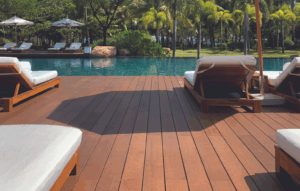
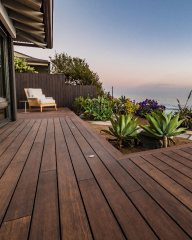
The Australian summer lifestyle revolves around outdoor living spaces where decks serve as extensions of home. As homeowners seek low-maintenance solutions, composite decking has surged in popularity, marketed as an innovative alternative to traditional timber. Yet beneath the promise of convenience lies an environmental cost that contradicts the sustainability many homeowners hope to achieve. Understanding the true impact of composite decking reveals why natural alternatives deserve serious consideration.
.webp?width=1920&quality=80&format=auto)
The Australian summer lifestyle revolves around outdoor living spaces where decks serve as extensions of home. As homeowners seek low-maintenance solutions, composite decking has surged in popularity, marketed as an innovative alternative to traditional timber. Yet beneath the promise of convenience lies an environmental cost that contradicts the sustainability many homeowners hope to achieve. Understanding the true impact of composite decking reveals why natural alternatives deserve serious consideration.
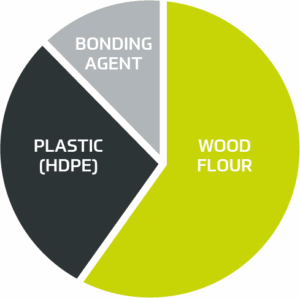
Composite decking represents a relatively recent innovation in outdoor building materials. Manufacturers combine wood fibers, plastics, and bonding agents to create boards that superficially resemble timber while promising reduced maintenance requirements.
The appeal seems straightforward. Composite materials resist weathering, don't require regular staining or sealing, and maintain appearance with simple cleaning. For time-pressed homeowners, this convenience justifies premium pricing and positions composites as modern improvements over traditional timber or bamboo decking.
However, this simplified narrative overlooks fundamental material characteristics that determine environmental impact. The plastic component, essential to composites' durability and low maintenance, introduces problems that extend far beyond the deck itself.
Plastics derive from fossil fuels, linking composite decking directly to climate change through both material sourcing and manufacturing. The environmental mathematics prove troubling when examined closely.
Research reveals that plastic production generates approximately five tonnes of carbon dioxide per tonne of plastic produced. This rate roughly doubles the carbon emissions generated by producing a tonne of oil. For climate-conscious homeowners, this means composite decking creates significantly higher carbon footprints than the natural alternatives it replaces.
David Roberts, journalist at Vox, notes that if plastic demand grows as projected, annual emissions associated with plastic production will double by mid-century. Every composite deck installed contributes to this trajectory, transforming what seems like a simple material choice into participation in accelerating climate change.
By 2017, humanity had produced 8.3 billion metric tons of plastic. This staggering figure continues growing, with annual plastic production expected to triple by 2050. At least 8 million tons of plastic enter oceans annually, creating pollution that affects marine ecosystems and eventually human food chains.
Composite decking participates in this crisis. Most homeowners replace decks every seven to ten years, creating continuous flows of plastic waste. Unlike natural materials that decompose and return nutrients to soil, composite materials persist in landfills or environments for centuries.
The afterlife of building materials matters as much as their performance during use. This perspective reveals stark differences between natural and composite decking materials.
Natural decking materials like timber or bamboo fully decompose in approximately three years when returned to soil at lifecycle end. This rapid breakdown allows organic materials to reintegrate into natural cycles, providing nutrients and supporting ecosystem health.
Composite decking, by contrast, persists for up to 450 years in landfills. This 150-fold difference in decomposition time transforms every composite deck into long-term environmental liability. The convenience of low maintenance during ten years of use creates waste management challenges lasting centuries.
With millions of decks reaching end-of-life every decade, the cumulative waste from composite materials becomes significant. Each replacement adds to landfill volumes or, worse, contributes to plastic pollution in natural environments where materials break down into microplastics that contaminate water, soil, and food chains.
This reality contradicts composite decking's marketing as an environmentally responsible choice. Low maintenance doesn't equal low impact when lifecycle analysis includes manufacturing emissions and centuries of waste persistence.
Many composite manufacturers prominently feature recycled plastic content, positioning their products as "eco-friendly," "sustainable," or "green." This marketing deserves closer examination through the lens of genuine environmental impact.
William McDonough and Michael Braungart, authors of Cradle to Cradle: Remaking The Way We Make Things, observe that "being less bad is no good." Composites made from recycled plastics remain plastics, with all the associated environmental problems.
Using recycled content doesn't eliminate plastic's fundamental issues. It postpones rather than prevents waste, slightly extending the period before materials enter landfills or ecosystems. This incremental improvement doesn't justify claims of genuine sustainability.
Josh Lepawsky offers a striking metaphor for understanding recycling's limitations. Imagine walking into a bathroom where the tub overflows. Your first action would be turning off the tap, not grabbing a mop and bucket. Yet recycling represents the mop and bucket approach—addressing symptoms rather than causes.
Turning off the tap equates to reducing plastic production. Attempting to clean up a growing mess through recycling won't address the root problem. Composite decking made from recycled plastics continues driving demand for plastic materials, perpetuating rather than solving the crisis.
Understanding recycling's actual performance reveals why recycled content claims deserve skepticism. The numbers tell a sobering story about what happens to plastic waste.
According to WWF reports, Australia used 3.4 million tonnes of plastics in 2017-18. Of this amount, only 9.4% was recycled—a fraction far smaller than most people realize. Of recycled plastics, 46% was processed domestically while 54% was exported for reprocessing.
These figures reveal recycling's limited capacity to address plastic waste. More than 90% of plastics used in Australia during that period weren't recycled, entering landfills, incinerators, or environments as pollution.
Asian countries that previously accepted recycled plastics from Australia and other nations now face their own plastic waste crises. Many have reduced imports, forcing some Australian cities to cancel or reduce recycling programs.
This changing landscape means recycled plastic supply chains are increasingly uncertain. Products marketed based on recycled content may not be viable long-term as international recycling markets contract.
The combination of materials in composite decking creates problems beyond those associated with plastic alone. Understanding why requires examining what happens when different material types merge.
Pablo Paster of Treehugger explains the fundamental issue: "When you mix an industrial material (plastic) that is recyclable with a biological material (wood) that is compostable you get a material that is neither recyclable nor compostable."
This mixing destroys the end-of-life options that pure materials possess. Timber can return to soil. Plastic can theoretically be recycled (though poorly in practice). Composite materials combining both can do neither effectively.
McDonough and Braungart describe such products as "monstrous hybrids"—materials created with good intentions but without considering their afterlife. Composite decking purchases may stem from environmental consciousness, yet the materials' design precludes genuinely sustainable disposal.
Bryon Donohoe, senior scientist at the National Renewable Energy Laboratory, emphasizes that "before you even make something, you have to think about throwing it away." Composite materials fail this test, creating products that inevitably become problematic waste.
Even if composite materials could be fully recycled, this wouldn't solve underlying problems. The nature of plastic recycling itself imposes limitations that prevent truly circular material cycles.
Plastic deteriorates with each use, meaning recycling is actually downcycling. Material quality decreases with every recycling cycle, breaking down into lesser quality particles that eventually cannot be used further.
This degradation means even 100% recycling of new plastic production only postpones waste rather than preventing it. After a few cycles, materials become too degraded for use and end up in landfills or environments regardless.
As plastics break down, they create microplastics that contaminate water, soil, and food chains. These particles appear in seafood, drinking water, and even air. Composite decking contributes to this contamination as materials gradually degrade, releasing particles into surrounding environments.
The prospect of finding composite decking particles in food years after installation transforms what seems like distant environmental concern into immediate personal health issue.
Composite decking's primary appeal rests on avoiding maintenance required by natural materials. Examining this trade-off reveals whether convenience justifies environmental costs.
Natural timber or bamboo decking typically requires cleaning and resealing or staining every 18 months to two years. This maintenance preserves appearance and extends lifespan, preventing premature replacement.
For most homeowners, this represents a few hours of work or modest professional service costs annually. The question becomes whether this manageable maintenance justifies centuries of waste and significant carbon emissions from choosing composites instead.
With climate change accelerating and plastics filling oceans, applying a coat of finish every 18 months seems remarkably reasonable. This minor inconvenience prevents participation in plastic pollution while supporting materials that sequester rather than emit carbon.
The framing of maintenance as burden rather than environmental responsibility reflects marketing that prioritizes convenience over planetary health. Reconsidering this perspective helps homeowners make choices aligned with genuine values.
Understanding composite decking's problems clarifies why natural alternatives deserve consideration. Bamboo decking offers particular advantages that address both environmental concerns and performance requirements.
Bamboo grows rapidly, achieving harvest readiness in five to seven years compared to timber's 20 to 30 year cycle. During growth, bamboo sequesters carbon dioxide while producing 35% more oxygen than equivalent tree stands. This makes bamboo decking carbon-positive during material production.
At end-of-life, bamboo decomposes completely within three years, returning nutrients to soil rather than persisting as waste. This complete lifecycle—from carbon sequestration through growth to nutrient return through decomposition—demonstrates genuine sustainability that composite materials cannot match.
Bamboo decking's hardness exceeds many timber species, providing excellent wear resistance. Properly treated bamboo withstands weather exposure remarkably well, delivering service lives comparable to premium timber decking.
The material remains comfortable underfoot in Australia's climate. Unlike composite materials that can become uncomfortably hot in direct sun, bamboo stays cooler to the touch, enhancing usability during summer months when decks see heaviest use.
Bamboo decking requires similar maintenance to timber—periodic cleaning and refinishing to preserve appearance and performance. This maintenance, far from being burdensome, represents small effort that prevents enormous environmental costs associated with composite alternatives.
House of Bamboo provides guidance on bamboo decking care that makes maintenance straightforward. The process becomes routine rather than onerous, delivering years of beautiful outdoor living spaces without environmental compromise.
Understanding composite decking's true costs empowers homeowners to make decisions aligned with environmental values. Several considerations help navigate options toward genuinely sustainable choices.
Consider materials from production through disposal. What emissions occurred during manufacturing? What resources were consumed? How will materials be disposed of when the deck reaches end-of-life? These questions reveal environmental costs that marketing often obscures.
Bamboo decking and quality timber emerge favorably from lifecycle analysis. Both sequester carbon during growth, require minimal processing energy, and decompose cleanly at end-of-life. Composite materials fail on all three criteria despite low-maintenance appeal.
"Eco-friendly," "green," and "sustainable" claims require scrutiny. What specifically makes a product sustainable? Recycled content alone doesn't qualify when materials create long-term waste and emissions problems.
Seek transparency about material sources, manufacturing processes, and end-of-life options. Reputable suppliers provide this information readily. Vague sustainability claims without supporting data suggest marketing rather than genuine environmental responsibility.
Low maintenance sounds appealing until weighed against environmental consequences. The few hours required annually to maintain natural decking seems minimal compared to centuries of waste and significant carbon emissions from composites.
This reframing helps homeowners recognize that convenience isn't neutral—it often transfers costs from personal time to environmental burden. Accepting modest maintenance responsibility prevents far greater problems.
Individual material choices may seem insignificant against global environmental challenges. However, collective decisions create market signals that drive industry change and demonstrate commitment to genuine solutions.
Every natural deck installed instead of composite reduces plastic production demand. Scaling these choices across millions of homes creates meaningful impact on production volumes and associated emissions.
This represents the "turning off the tap" approach rather than "mopping up" through recycling. It addresses root causes rather than attempting to manage symptoms of fundamentally flawed material systems.
Choosing bamboo decking or sustainable timber supports industries that improve rather than degrade ecosystems. Bamboo cultivation creates carbon sinks while providing economic alternatives to deforestation. This positive impact multiplies as demand grows.
Market signals matter. Demonstrating that homeowners prioritize genuine sustainability over convenience marketing encourages innovation in truly regenerative materials rather than incremental improvements to problematic products.
Most homeowners care about environmental health and want to minimize their impact. Choosing natural decking materials aligns purchasing decisions with these values, preventing the cognitive dissonance of supporting plastic production while claiming environmental consciousness.
This alignment creates integrity between stated values and actual choices. It demonstrates that sustainability means more than marketing claims—it requires accepting modest inconveniences for genuine environmental benefit.
Moving from understanding composite decking's problems to specifying better alternatives requires practical steps. House of Bamboo makes exploring bamboo decking straightforward and supported by expert guidance.
Order samples to experience bamboo decking's quality, appearance, and texture directly. Evaluate how the material looks in your outdoor space's lighting conditions. Compare it against other options under consideration to assess aesthetic and practical suitability.
Explore projects showcasing bamboo decking in various applications. Seeing completed installations reveals performance over time and demonstrates aesthetic possibilities across different architectural styles and landscape designs.
Contact House of Bamboo's design consultants to discuss your specific project requirements. This expertise helps navigate product selection, installation planning, and maintenance expectations, ensuring successful outcomes that deliver both beauty and environmental responsibility.
The choice between composite and natural decking represents more than material selection. It reflects values about convenience versus environmental responsibility, short-term thinking versus lifecycle consideration, and marketing claims versus genuine sustainability. When the choice comes down to maintaining a natural deck every 18 months or contributing to plastic waste lasting centuries, the decision becomes clear.