A Material Manifesto: Jed Long's Laminated Bamboo Cabin Prototype
In a recent update shared directly with House of Bamboo, architect Jed Long, Co-Founder of Cave Urban, gave us a closer look at his latest project: a prototype cabin built from laminated bamboo in regional Australia. For over a decade, Jed has explored how bamboo can be used structurally, and this project marks an exciting step forward in demonstrating bamboo's readiness for mainstream Australian construction.
In a recent update shared directly with House of Bamboo, architect Jed Long, Co-Founder of Cave Urban, gave us a closer look at his latest project: a prototype cabin built from laminated bamboo in regional Australia. For over a decade, Jed has explored how bamboo can be used structurally, and this project marks an exciting step forward in demonstrating bamboo's readiness for mainstream Australian construction.
Cabin as a Material Manifesto
Bamboo as the Right Material for This Moment
Integration of House of Bamboo Products in the Cabin
Project Demonstrating Bamboo’s Viability
Project Alignment with House of Bamboo’s Mission
Applications Benefiting from This Approach
Architects Learning from This Project
Next Steps for Bamboo Construction in Australia
Movement Toward Regenerative Construction
Share this post:
Cabin as a Material Manifesto
Bamboo as the Right Material for This Moment
Integration of House of Bamboo Products in the Cabin
Project Demonstrating Bamboo’s Viability
Project Alignment with House of Bamboo’s Mission
Applications Benefiting from This Approach
Architects Learning from This Project
Next Steps for Bamboo Construction in Australia
Movement Toward Regenerative Construction
What Makes This Cabin a Material Manifesto?
This cabin isn't just a building, it's a material manifesto that challenges conventional assumptions about what materials belong in contemporary Australian architecture. In a construction landscape dominated by timber, steel, and concrete, Jed Long's prototype demonstrates that engineered bamboo can meet structural requirements while delivering superior environmental performance. The project represents years of research, testing, and collaboration distilled into a tangible demonstration of bamboo's capabilities.
In a world where building regulations can often limit material innovation, Jed Long posed a crucial question that resonates throughout the architecture and construction industry: "How do you build with bamboo in a highly regulated context?" That question became the foundation of his design journey, pushing him to navigate building codes, engage with certifiers, and develop construction methodologies that satisfy regulatory requirements while showcasing bamboo's unique properties.
The prototype cabin utilises a full laminated bamboo frame, demonstrating its structural integrity and suitability for prefabricated construction. Every beam, post, and structural member serves as proof of concept, showing that bamboo can carry loads, resist lateral forces, and maintain dimensional stability across Australia's variable climate conditions. The cabin's success in securing building approval establishes precedent for future bamboo structures, making the path easier for architects and builders who follow.
Why Is Bamboo the Right Material for This Moment?
The building industry faces an urgent need for low-carbon alternatives to timber, driven by climate imperatives, embodied carbon regulations, and growing awareness of construction's environmental impact. Jed explained that bamboo's rapid growth cycle, reaching harvestable maturity in three to five years compared to decades for timber, creates a continuously renewable resource base. This regenerative capacity means bamboo forests can meet construction demand without depleting natural ecosystems or contributing to deforestation.
Carbon Sequestration and Environmental Performance
Bamboo absorbs more carbon than most tree species during its growth phase, with some varieties sequestering up to four times more carbon dioxide than equivalent hardwood stands. This natural carbon capture provides measurable climate benefits before bamboo even enters the manufacturing process. When combined with low-energy lamination techniques and efficient transportation, bamboo's total embodied carbon remains dramatically lower than steel, concrete, or even conventional timber products.
Beyond environmental credentials, bamboo offers structural performance comparable to steel and hardwood without the environmental cost or resource depletion concerns. Laminated bamboo beams achieve impressive strength-to-weight ratios, making them viable for load-bearing applications while remaining lighter and easier to handle than equivalent timber or steel members. This performance density makes bamboo particularly valuable for prefabricated construction, where component weight affects transportation costs and installation efficiency.
How Are House of Bamboo Products Integrated Throughout the Cabin?
Jed acknowledged that the integration of House of Bamboo's engineered bamboo products plays a central role throughout the cabin, demonstrating the versatility and reliability of our material systems. From structural posts and beams that form the primary load-bearing frame to internal joinery elements that define interior spaces, our bamboo contributes to both the build's structural strength and its natural aesthetic character.
Structural Framework and Load-Bearing Elements
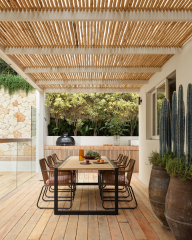
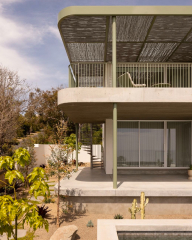
Laminated bamboo beams and vertical posts support the roof structure, offering impressive structural capacity with a warm natural finish that eliminates the need for additional cladding or concealment. The exposed structural system becomes an architectural feature, celebrating the material's beauty while demonstrating its performance capabilities. This honest expression of structure aligns with contemporary design values that prize authenticity and material transparency.
Precision-cut laminated bamboo members are secured with concealed joinery systems, highlighting the material's consistency and dimensional accuracy in structural applications. Unlike natural timber, which varies significantly in density and grain orientation, engineered bamboo's manufacturing process creates highly uniform components that simplify fabrication and ensure predictable performance. The precision joinery demonstrates that bamboo can meet the exacting tolerances required for modern prefabricated construction.
Interior Joinery and Finish Applications
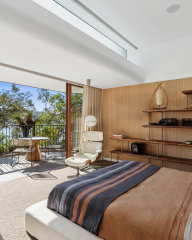
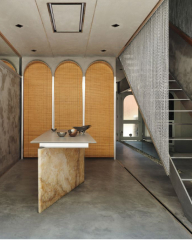
Internal joinery applications showcase bamboo's aesthetic versatility, proving the material works equally well in structural and finish applications. Cabinetry, shelving, and built-in furniture elements utilise bamboo's natural warmth and texture to create inviting interior environments. This dual functionality, serving as both structure and finish material, streamlines construction and reduces the number of different materials required, supporting circular design principles and simplifying end-of-life material recovery.
The interior applications demonstrate bamboo's design flexibility across diverse aesthetic contexts. Whether detailed for minimalist contemporary spaces or warmer, more textured environments, bamboo responds to varied design directions while maintaining its inherent material character. This adaptability makes it valuable for architects seeking materials that can support their creative vision without compromising sustainability commitments.
What Does This Project Demonstrate About Bamboo's Viability?
This project demonstrates that bamboo is no longer an emerging alternative relegated to experimental builds or niche eco-projects. It is a viable material for contemporary architecture and interior environments, capable of meeting Australia's building codes, satisfying structural engineers, and delivering the performance that architects and clients require. The cabin's successful completion and regulatory approval mark a significant milestone in bamboo's journey toward mainstream acceptance.
Prefabrication and Modular Construction Potential
The prefabricated construction approach validates bamboo's suitability for modular building systems, where components are manufactured off-site in controlled conditions and assembled rapidly on location. This methodology reduces construction timelines, minimises site waste, improves quality control, and makes construction feasible in remote or challenging locations. For regional Australian contexts where skilled labour may be limited, prefabricated bamboo systems offer practical construction solutions.
The modular approach also supports adaptability and future modifications. Buildings can be expanded, reconfigured, or partially dismantled without compromising structural integrity. This flexibility aligns with circular economy principles, treating buildings as material banks rather than permanent fixtures. Components can potentially be recovered at end-of-life and reused in new configurations, extending material value beyond single-use applications.
Navigating Regulatory Frameworks
Perhaps most significantly, this project proves that bamboo construction can navigate Australia's rigorous building approval processes. By working closely with engineers, certifiers, and building authorities, Jed established pathways for bamboo specification that future projects can reference. This precedent-setting work reduces barriers for other architects and builders interested in bamboo, demonstrating that regulatory compliance is achievable with proper documentation and professional collaboration.
The engineering data and structural calculations developed for this project contribute to the growing knowledge base around bamboo construction in Australian contexts. Each successful approval makes subsequent projects more straightforward, gradually normalising bamboo as a specification option. This incremental progress, driven by pioneering projects like Jed's cabin, builds the foundation for broader industry acceptance.
How Does This Project Align with House of Bamboo's Mission?
Jed's goal to create modular, scalable bamboo buildings for the Australian market aligns perfectly with House of Bamboo's legacy and ongoing mission. For over 50 years, we've supported architects, designers, and builders with high-quality, sustainable materials that perform reliably across diverse applications. This project exemplifies the collaborative relationships we value, where material suppliers, designers, and builders work together to push boundaries and demonstrate what's possible with innovative materials.
Supporting Design Innovation and Material Education
Our role extends beyond material supply to include technical support, performance data, and collaborative problem-solving throughout the design and construction process. For projects like Jed's cabin, this means providing engineering specifications, connecting architects with fabricators experienced in bamboo construction, and sharing knowledge accumulated through decades of experience. This consultative approach reflects our understanding that material innovation requires partnership, not just product transactions.
We also recognise that projects like this cabin serve crucial educational functions for the broader industry. Each completed bamboo structure becomes a tangible reference point that other architects can visit, photograph, and learn from. These real-world demonstrations prove more convincing than any technical specification or marketing claim, showing materials performing in actual service conditions rather than theoretical laboratory scenarios.
Building Industry Confidence in Bamboo
Together with visionary architects like Jed Long, we're laying the foundation for a future where bamboo stands proudly alongside timber, steel, and concrete in shaping the built environment. This vision requires sustained effort across multiple fronts: demonstrating performance through completed projects, developing technical documentation that supports confident specification, educating design professionals about bamboo's capabilities, and advocating for regulatory frameworks that accommodate innovative materials.
The cabin project contributes to all these objectives simultaneously. It provides performance evidence, generates technical case study material, educates through its physical presence, and establishes regulatory precedent. This multiplier effect means that pioneering projects deliver value far beyond their individual scope, accelerating industry-wide progress toward sustainable material adoption.
What Applications Could Benefit from This Approach?
The cabin prototype's success suggests numerous applications where prefabricated bamboo construction could deliver value. Residential projects, particularly in regional or coastal settings where bamboo's aesthetic warmth complements natural surroundings, represent obvious opportunities. The material's resistance to salt exposure and moisture makes it particularly suitable for coastal applications, while its natural insulation properties provide comfort across diverse climate zones.
Hospitality and Tourism Structures
Hospitality venues seeking to communicate environmental values while creating memorable guest experiences could benefit from bamboo's unique combination of sustainability credentials and aesthetic appeal. Eco-resorts, glamping facilities, and boutique accommodations can use bamboo structures to differentiate themselves while genuinely reducing environmental impact. The material's association with natural wellness and biophilic design aligns perfectly with hospitality trends toward health-focused, nature-connected experiences.
Commercial applications including cafés, restaurants, and retail environments could adopt similar prefabricated bamboo systems for rapid deployment and distinctive design character. The modular approach allows for flexible configurations that adapt to varied site conditions and spatial requirements. Projects like the Australian Arms Hotel and multiple Woolworths locations demonstrate bamboo's versatility across commercial contexts, from intimate hospitality spaces to large-format retail environments.
Community and Educational Buildings
Community buildings, educational facilities, and demonstration projects for sustainability organisations represent ideal contexts for bamboo construction. These projects often prioritise environmental performance and material transparency, making bamboo's credentials particularly relevant. The educational value of exposed bamboo structures, where visitors can see and understand the building's construction system, supports broader sustainability education goals.
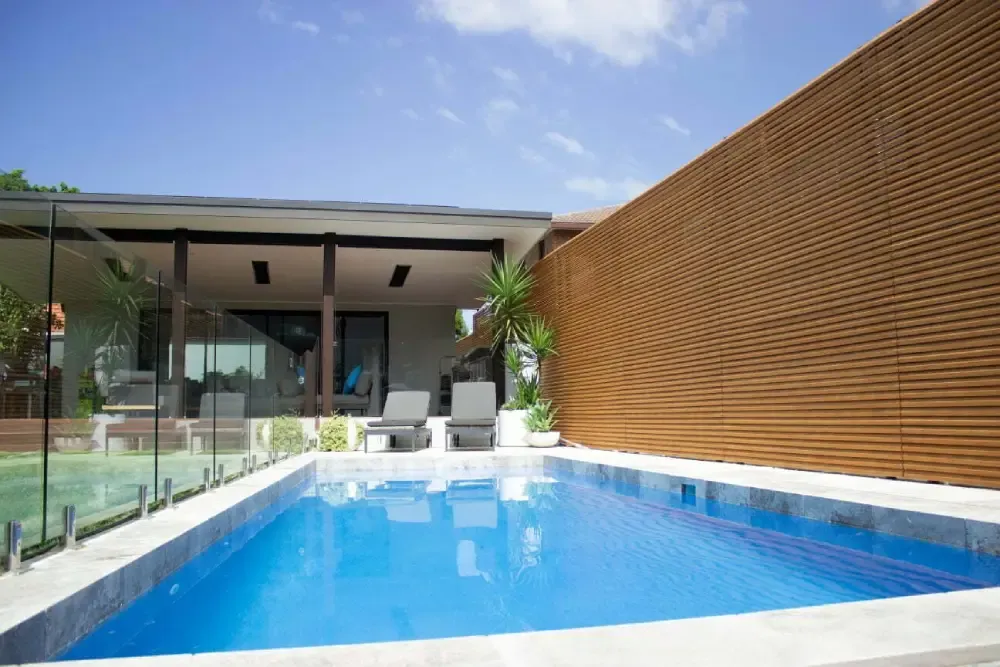
Landscape architecture applications including pavilions, shade structures, and outdoor education facilities could utilise similar prefabricated approaches. Products like bamboo poles, rod screens, and Natureed fencing already demonstrate bamboo's outdoor durability. Scaling these applications to larger structural elements follows naturally from Jed's work validating engineered bamboo's performance in exposed conditions.
How Can Architects Learn from This Project?
For architects and designers inspired by Jed Long's cabin, multiple pathways exist for exploring bamboo's potential in your own projects. Begin by examining the structural systems and detailing approaches employed in the cabin, understanding how engineering requirements were satisfied while maintaining design integrity. The concealed joinery systems, exposed structural members, and integrated finish applications offer lessons applicable across diverse project types.
Technical Resources and Design Support
House of Bamboo provides comprehensive technical resources supporting bamboo specification, including engineering data, installation details, and maintenance guidelines. Our team offers design consultation from early concept stages through construction documentation, helping architects navigate the technical considerations specific to bamboo construction. This support proves particularly valuable for firms specifying bamboo for the first time, providing confidence and reducing specification risk.
Our CPD training programmes offer structured education on bamboo materials, covering topics from material properties and manufacturing processes to design applications and sustainability credentials. These sessions provide opportunities to engage directly with technical specialists, asking project-specific questions and exploring design possibilities. For architects serious about incorporating bamboo into their practice, this educational foundation proves invaluable.
Sample Evaluation and Material Experience
Order samples to experience bamboo's physical qualities firsthand, as specifications and photographs cannot fully convey the material's texture, colour variations, and tactile character. Understanding how bamboo feels, how it responds to light, and how it ages helps architects make informed design decisions. Samples also facilitate client presentations, allowing building owners to connect with the material before committing to full-scale application.
Review our projects gallery to see how other architects and designers have successfully integrated bamboo across varied contexts and budgets. These case studies demonstrate real-world performance and reveal detailing approaches that work in practice. Projects ranging from residential renovations to large commercial installations show bamboo's scalability and versatility.
What's Next for Bamboo Construction in Australia?
Jed Long's cabin represents an important milestone, but it's just the beginning of what's possible with engineered bamboo in Australian construction. As more architects gain confidence in the material, as engineering data accumulates, and as regulatory pathways become clearer, we anticipate accelerating adoption across residential, commercial, and institutional sectors.
The development of Australian-specific design standards and engineering codes for bamboo construction would dramatically accelerate this transition. Currently, each bamboo project requires individual engineering assessment and certifier approval, creating barriers that discourage all but the most committed designers. Standardised design tables, connection details, and compliance pathways would normalise bamboo specification, making it as straightforward as selecting timber species or steel grades.
Growing awareness of embodied carbon and construction's climate impact creates favourable conditions for bamboo adoption. As carbon pricing mechanisms emerge and green building standards tighten, materials with superior environmental profiles gain competitive advantage. Bamboo's combination of rapid renewability, high carbon sequestration, and low processing energy positions it advantageously in this evolving landscape.
Join the Movement Toward Regenerative Construction
Jed Long's prototype cabin proves that bamboo construction can meet Australia's building standards while delivering genuine sustainability outcomes. The project demonstrates technical viability, regulatory feasibility, and design excellence, challenging the construction industry to reconsider its material assumptions. For over 50 years, House of Bamboo has supported projects pushing boundaries and proving what's possible with sustainable materials.
To explore how engineered bamboo could enhance your next project, contact our team for technical consultation and design support. Browse our applications pages to see bamboo's versatility across facades, interiors, flooring, and landscape contexts. Review completed projects demonstrating real-world performance across diverse building types.
Order samples to experience the material that's reshaping Australian architecture. Together with forward-thinking architects like Jed Long, we're building a future where sustainability and design excellence converge, one beautiful bamboo structure at a time.
Would you like to find out which product will meet your expectations?