As Australian properties become denser and boundaries tighter, the need for privacy has never been more pressing. Yet traditional fencing solutions often feel heavy-handed, blocking light and views while doing little to enhance the aesthetic of outdoor spaces. Natural privacy screens offer an alternative approach—one that balances seclusion with sustainability, design sophistication with practical performance.

As Australian properties become denser and boundaries tighter, the need for privacy has never been more pressing. Yet traditional fencing solutions often feel heavy-handed, blocking light and views while doing little to enhance the aesthetic of outdoor spaces. Natural privacy screens offer an alternative approach—one that balances seclusion with sustainability, design sophistication with practical performance.
Understanding Privacy Rights and Screening Options in Australia
Australia's residential landscape is evolving rapidly. Property sizes shrink while buildings rise higher, creating situations where neighbouring windows overlook private gardens, pools, and entertaining areas. This density brings challenges that traditional boundary treatments struggle to address.
According to the Law Society of NSW, there is no automatic legal right to visual privacy from neighbours. If a neighbour can see into your backyard from their property, they're legally entitled to that view. This places responsibility for privacy firmly in your hands.
You have two options: request your neighbour modify their behaviour, or install screening that blocks the sightline. The first approach rarely succeeds. The second gives you control while potentially adding value to your property.
Why Privacy Screens Outperform Traditional Fencing
Traditional boundary fencing seems obvious, but council regulations often impose strict height limits. These restrictions are particularly tight along front boundaries and side setbacks, limiting what conventional fencing can achieve.
Privacy screens offer greater flexibility. They install independently of boundary structures, layer onto existing fences for additional height, or integrate as architectural features within landscape design. This transforms a practical problem into a design opportunity.
The Advantages of Bamboo and Natural Reed Materials
Natural materials like bamboo and water reed bring distinct benefits to privacy screening applications. These renewable resources combine environmental credentials with aesthetic warmth and technical performance that synthetic alternatives cannot match.
Bamboo reaches full maturity in three to five years, compared to decades for hardwood timber. After harvesting, the root system regenerates new culms without replanting. This rapid renewal cycle makes bamboo one of the most genuinely sustainable building materials available. Water reeds grow even faster, reaching harvestable size within a single growing season.
Despite their organic origins, these materials deliver impressive structural performance. Bamboo's tensile strength can rival steel in certain applications, while its compressive strength exceeds concrete. When properly treated, bamboo and reed materials resist moisture, UV degradation, termites, and fungal attack—particularly suited to Australian coastal conditions.
Natural screening creates a fundamentally different visual presence than metal, glass, or masonry barriers. Rather than stark blockage, bamboo and reed screens filter light, create subtle shadows, and introduce organic textures that complement both plantings and architectural materials. This softer approach aligns with biophilic design principles, supporting human wellbeing through connection to natural forms.
Solution 1: Bamboo Rod Privacy Screens
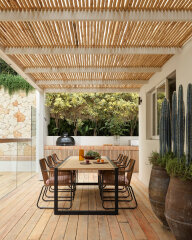
Bamboo rod screens consist of whole bamboo culms arranged vertically and bound with concealed stainless steel wire. This construction creates visual separation while maintaining airflow and filtered light—offering privacy without the enclosed feeling of solid barriers.
Balancing Privacy with Light and Openness
The defining characteristic of bamboo rod screening is its semi-permeable quality. Individual culms space to create screening density you can customize based on specific privacy needs. Tighter spacing provides more complete visual blockage, while wider gaps maintain transparency and light penetration.
This adjustability proves valuable where you need privacy from specific angles while preserving desirable views in other directions. A rod screen might block sightlines from a neighbouring upper-story window while still allowing you to see your garden beyond.
Natural color variation within bamboo prevents visual monotony. Individual culms range from pale cream to golden amber, with distinctive node rings creating rhythmic horizontal banding. This organic patterning adds visual interest that manufactured materials cannot achieve.
Installation and Application Flexibility
Bamboo rod screens adapt to various installation scenarios. They attach directly to existing fence tops, adding height where local regulations permit. They work as standalone panels within framing systems. They can suspend from overhead pergola structures to create movable screening that adjusts as needs change.
This versatility makes bamboo rod screens suitable for property boundaries, pool perimeter screening, garden privacy walls, and courtyard enclosures. House of Bamboo's Fencing and Screening range includes multiple rod screen configurations sized for different applications.
Coastal Durability and Wind Resistance
The concealed stainless steel binding system makes bamboo rod screens particularly suitable for coastal properties. Where many screening materials corrode rapidly in salt-laden air, stainless steel maintains integrity. Bamboo itself contains natural silica that provides inherent weather resistance.
Bamboo's natural flexibility helps these screens withstand wind loads. Rather than resisting wind with rigid strength that eventually fails, bamboo flexes and returns, dissipating force without structural damage. This reliability matters in exposed locations subject to strong winds.

Solution 2: Slatted Bamboo Screens
Slatted bamboo screens use precision-milled rectangular bamboo sections rather than whole culms. The result is a more architectural product with clean lines and consistent spacing—ideal where screening needs to integrate with contemporary design.
Contemporary Design for Modern Architecture
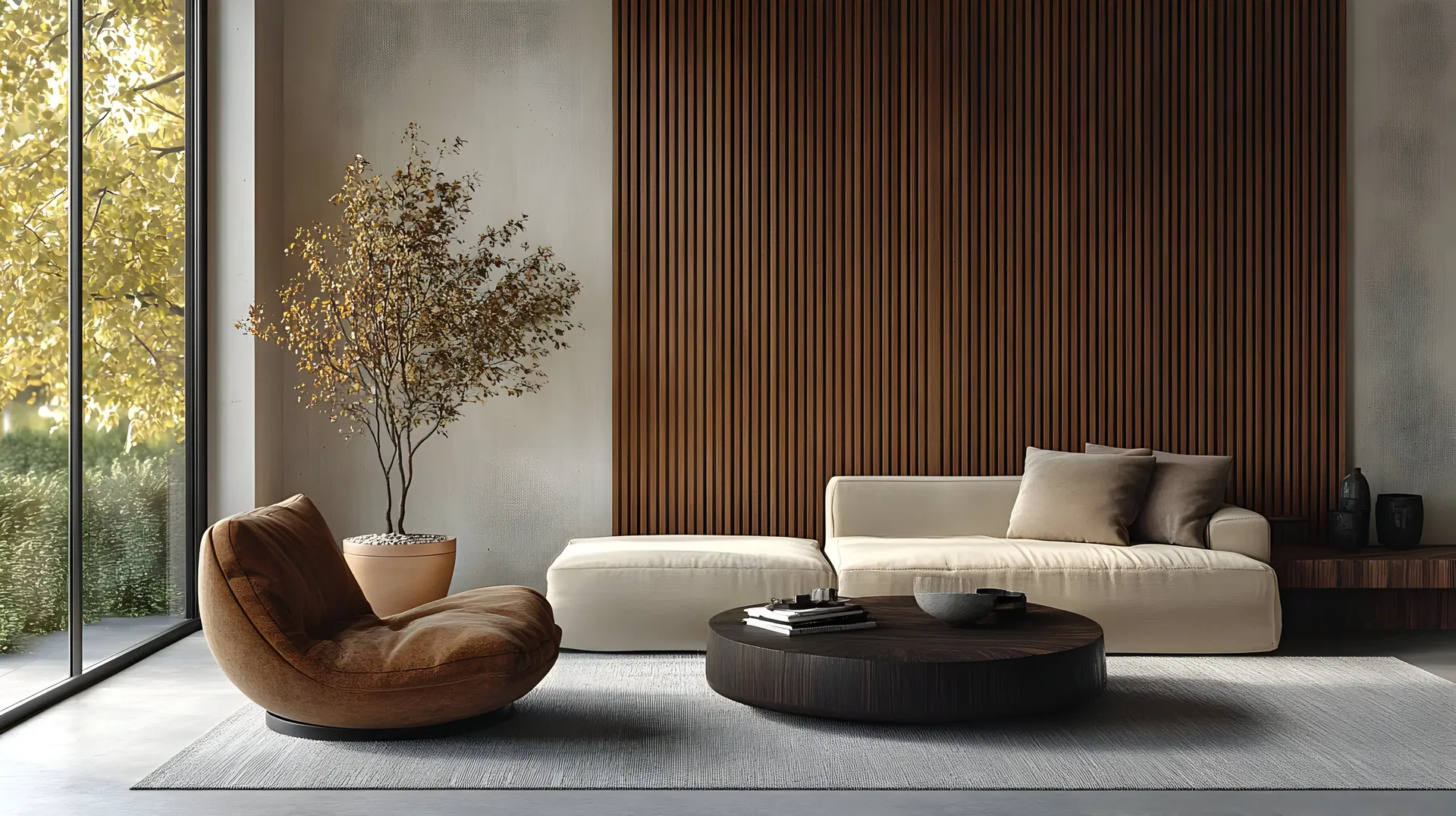
The refined geometry of slatted screens suits projects with strong architectural direction. Where bamboo rod screens celebrate organic irregularity, slat screens offer precision and consistency. The horizontal or vertical lines integrate seamlessly into modernist vocabularies emphasizing clean geometry and material honesty.
This makes slatted bamboo screening appropriate for architect-designed homes, commercial developments, and urban projects where screening must complement rather than contrast with built form. The material warmth of bamboo softens what might otherwise feel austere, while geometric arrangement maintains visual discipline.
Builders and landscapers familiar with timber construction can work with bamboo slats using conventional tools and techniques. The dimensional consistency of milled bamboo means no on-site adjustment for natural variation. This ease of installation helps control costs while ensuring reliable results.
Pool Certification and Service Area Screening
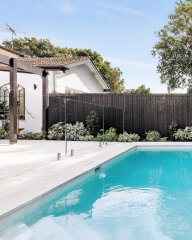
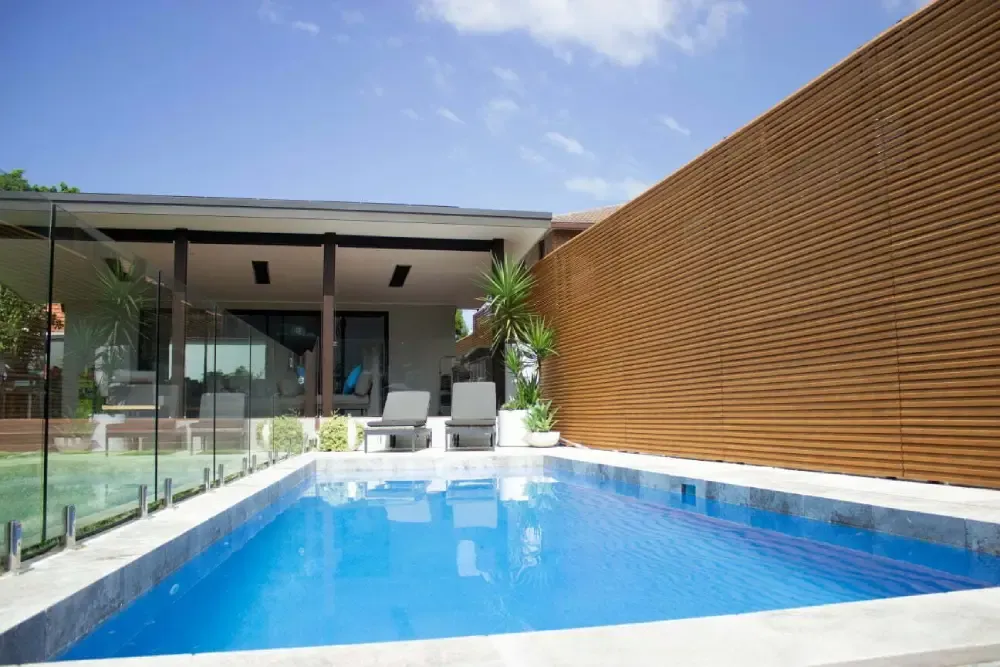
Engineered bamboo slat systems can meet all requirements of Australian pool fencing standards, including height specifications, gap dimensions, and structural performance criteria. This allows you to satisfy legal obligations while maintaining aesthetic preferences—avoiding the harsh appearance of glass or metal barriers.
House of Bamboo's Pool Compliant Fencing solutions include appropriately engineered slat systems with documentation for certifiers. The natural material transforms a mandatory safety barrier into a design feature.
Beyond decorative applications, slatted screens excel at concealing air conditioning condensers, bin storage areas, pool equipment, and outdoor utilities. The consistent spacing maintains ventilation while creating effective visual barriers, integrating service areas gracefully into overall design.

Solution 3: Bamboo Poles for Custom Privacy Solutions
Whole bamboo poles represent ultimate screening versatility. Available in diameters from 20mm to over 100mm and lengths reaching 6 meters, poles can be arranged in virtually any configuration your design requires.
Natural Character and Design Flexibility
Unlike manufactured products with uniform appearance, each bamboo pole is unique. Natural taper, node placement, and subtle color variation give every pole individual character. This organic authenticity resonates with designs emphasizing natural materials and biophilic principles.
Designers can celebrate this variation by arranging poles to highlight differences, or manage it through careful selection for projects requiring greater visual consistency. Either approach leverages bamboo's natural qualities rather than fighting against them.
Beyond Standard Screening Applications
Bamboo poles transcend conventional screening. They create striking entry features, define thresholds, establish vertical accents in landscape compositions, and provide architectural structure at any scale from intimate courtyards to expansive commercial developments.
The material's light weight relative to size makes poles practical for temporary installations. Event designers use bamboo poles for quickly-erected screening, spatial dividers, and decorative elements that transport and reconfigure easily. After events, poles can be repurposed rather than discarded—supporting circular economy principles.
Landscape and Interior Integration
For landscape architects, bamboo poles offer structural elements that integrate naturally with planting schemes. Their vertical emphasis complements ornamental grasses while contrasting with flowing plant forms. Unlike heavy timber posts or rigid metal, bamboo poles maintain visual lightness that supports rather than dominates vegetation.
Bamboo poles work equally well indoors, where they define space in commercial fit-outs, create feature walls in residential projects, or form decorative ceiling elements. House of Bamboo's Poles and Bamboo range includes both natural poles that weather to silver-gray and heat-treated options with rich caramelized coloring. The Interior Decor applications section demonstrates various ways bamboo poles enhance interior environments.
Solution 4: Outdoor Bamboo Blinds
Bamboo blinds introduce adjustability into privacy screening—a significant advantage in outdoor living areas where privacy requirements fluctuate throughout the day and across seasons. These roll-up screens allow you to control both privacy and environmental conditions with simple operation.
Dynamic Privacy and Environmental Control
The defining benefit of bamboo blinds is their adjustability. Raise them completely to admit maximum sunlight and maintain open views. Lower them partially for moderate privacy while preserving airflow. Deploy them fully to create intimate enclosure or shade during harsh sun.
This flexibility responds to the dynamic nature of outdoor living. Morning coffee might require full openness, afternoon entertaining might need partial screening, and evening gatherings might benefit from complete enclosure. Bamboo blinds adapt to all these scenarios without requiring permanent modifications.
Light Filtration and Easy Installation
Even when fully lowered, bamboo blinds filter rather than block light. The natural spacing between bamboo elements creates dappled patterns that maintain visual interest and psychological connection to the outdoors. This contrasts with solid screening that can make spaces feel dark and enclosed.
The interplay of light and shadow through bamboo changes throughout the day as the sun moves, creating dynamic visual effects. This constantly shifting pattern prevents the static quality that can make screened spaces feel monotonous.
Bamboo blinds retrofit easily to existing pergolas, verandahs, balconies, and alfresco structures using simple bracket mounting systems. This makes them ideal for renters or homeowners seeking privacy improvements without permanent structural modifications. The lightweight nature means they impose minimal structural loads.
Versatility Across Design Styles
Bamboo blinds complement both traditional and contemporary design. Their natural material brings warmth to modern minimalist spaces while fitting comfortably into more ornate or heritage contexts. This stylistic flexibility makes them suitable for diverse projects from suburban homes to commercial hospitality venues.
House of Bamboo's Bamboo Blinds and Shading range includes options for both protected and exposed outdoor locations, with appropriate treatments to ensure longevity in Australian conditions.

Solution 5: Natureed Water Reed Screening
Natureed represents a premium water reed screening product that landscape designers including Jamie Durie and Brendan Moar have specified for decades. This trademarked material offers distinct advantages for both aesthetic and performance applications.
Premium Construction for Superior Performance
Natureed contains up to 50% more reeds than comparable products on the market. This denser construction provides more complete screening coverage while maintaining the natural, organic appearance that makes water reed such an appealing material.
The reeds display a natural reddish hue similar to merbau timber, offering warm coloring that complements Australian hardwood decking and outdoor furniture. Bound with stainless steel wire, Natureed delivers exceptional durability in coastal and exposed locations where corrosion would compromise lesser products.
Natural Resistance and Lightweight Structure
Water reeds naturally resist water damage and termite attack, making them suitable for ground-level installations where timber might rot or require extensive treatment. This inherent resistance reduces maintenance requirements while eliminating concerns about chemical treatments leaching into surrounding soil or water.
The extremely lightweight nature of Natureed makes it easy to handle and install. A single person can manage large panels, and the material attaches readily to existing structures using standard fixings. This simplicity makes Natureed particularly attractive for achieving pool certification quickly—the material meets Australian Standards for pool barriers while maintaining an organic aesthetic.
Versatile Application Options
Natureed works effectively as boundary fencing, pool certification barriers, shading structures, and privacy screens. The material's flexibility allows it to conform to curved structures or irregular layouts that rigid screening materials cannot accommodate.
For landscape projects, Natureed provides instant maturity. Rather than waiting years for hedge plants to fill in, Natureed delivers immediate privacy with a natural appearance that complements rather than conflicts with planting schemes. House of Bamboo's Fencing and Screening range includes various Natureed configurations for different applications.

Solution 6: Decorative Bamboo and Rattan Screens
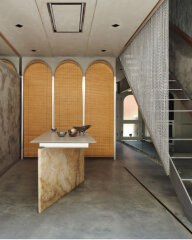
Decorative screens elevate privacy solutions into the realm of artistic expression. These products feature intricate patterns, woven designs, or architectural detailing that transforms functional screening into focal features within landscape and interior design schemes.
Aesthetic Impact Beyond Basic Privacy
Where basic screening simply blocks views, decorative screens create visual interest that enhances overall design. Geometric patterns cast intricate shadows as sunlight moves across them. Woven rattan panels introduce textural complexity. Laser-cut bamboo panels can incorporate custom designs or motifs meaningful to specific projects.
This artistic dimension makes decorative screens appropriate for high-visibility locations where screening becomes part of the design statement rather than purely functional infrastructure. Restaurant patios, hotel courtyards, boutique retail environments, and architect-designed residences all benefit from screening that contributes aesthetically while serving practical purposes.
Material Richness and Craftsmanship
Decorative screens often showcase traditional craftsmanship techniques adapted to contemporary applications. Woven rattan cane webbing demonstrates centuries-old weaving methods that create organic patterns impossible to replicate with manufactured materials. The subtle irregularities inherent in handcrafted work add character and authenticity.
These screens work effectively both indoors and outdoors, though installation location determines appropriate finishing and protection. Exterior applications require weather-resistant treatments, while interior screens can retain more delicate finishes that showcase material subtlety.
Integration with Architectural Features
Decorative screens integrate beautifully with architectural lighting. Backlighting creates dramatic silhouettes that emphasize pattern complexity. Uplighting or downlighting creates shadow play that animates surfaces throughout the evening. This interplay between material, pattern, and light transforms simple screening into dynamic architectural features.
For gardens and pool areas, decorative screens provide structure and definition while maintaining openness. They can delineate zones within larger spaces, create intimate areas within expansive yards, or establish focal points that draw the eye and organize spatial perception. House of Bamboo's broader product range includes various decorative screening options suitable for both residential and commercial applications.

Choosing the Right Privacy Screen for Your Project
Selecting appropriate privacy screening requires balancing multiple factors: the degree of privacy required, aesthetic preferences, budget considerations, site exposure conditions, and how the screening integrates with overall design.
Bamboo rod screens excel where filtered light and semi-transparency matter. Slatted screens suit contemporary architecture and pool certification requirements. Bamboo poles offer maximum design flexibility for custom solutions. Outdoor blinds provide adjustability for dynamic outdoor living spaces. Natureed delivers rapid installation with proven landscape performance. Decorative screens elevate functional requirements into design features.
Many projects benefit from combining multiple screening types. Solid Natureed might provide pool compliance along one boundary, while bamboo rod screens filter light along another. Decorative screens might define an entertaining area, while simple bamboo poles provide vertical structure within plantings.
House of Bamboo's design consultants can assess your specific requirements and recommend screening solutions that balance practical performance with aesthetic goals. Our team understands both the technical specifications required for compliance and the design sensibilities that create beautiful outdoor environments.
Taking the Next Step Toward Enhanced Privacy
Natural privacy screening offers Australian homeowners and design professionals a sustainable alternative to conventional barriers. These materials don't just block views—they enhance environments through their inherent beauty, environmental credentials, and connection to natural forms.
Whether you're addressing immediate privacy concerns or planning a comprehensive landscape renovation, bamboo and reed screening solutions provide options that work aesthetically, technically, and environmentally. The investment in quality natural materials pays dividends through longevity, minimal maintenance, and genuine contribution to property value.
House of Bamboo maintains extensive product ranges across all screening categories discussed here. Our Fencing and Screening, Pool Compliant Fencing, and Bamboo Blinds and Shading pages provide detailed specifications for specific products. For projects requiring hands-on evaluation, our Order Samples service allows you to experience material quality, texture, and color before making final decisions.
Design professionals seeking deeper expertise in specifying bamboo materials can access our CPD training programs, which provide accredited continuing education covering material properties, installation methods, and design applications. For all inquiries, our design consultants offer dedicated support—from initial concept through to installation guidance—ensuring your privacy screening project achieves both practical requirements and design aspirations.