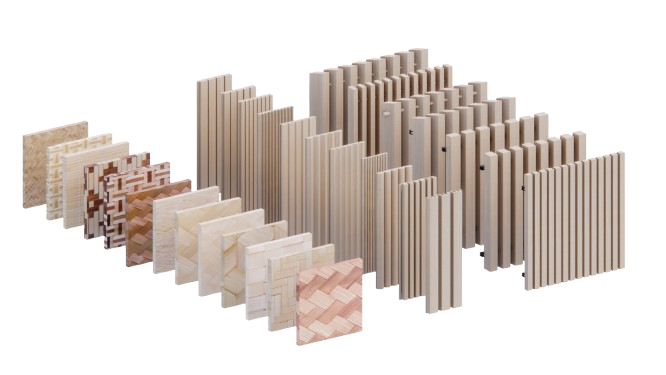
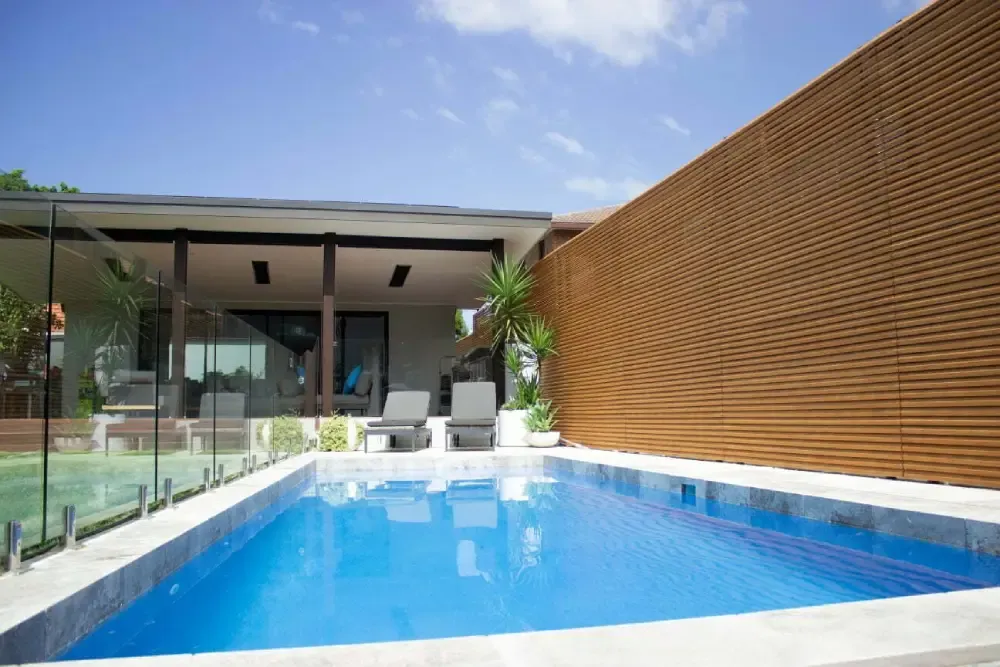
A growing trend in the world of architecture and design over the past few years has seen organic pole bamboo elevated to new heights, moving from traditional or rustic applications into sophisticated contemporary contexts. From Europe to Asia, industry leaders are turning their attention to reimagining how we view and use bamboo in the modern age, demonstrating that this ancient material possesses untapped potential for cutting-edge architecture when designers approach it with fresh perspectives and technical innovation.
A growing trend in the world of architecture and design over the past few years has seen organic pole bamboo elevated to new heights, moving from traditional or rustic applications into sophisticated contemporary contexts. From Europe to Asia, industry leaders are turning their attention to reimagining how we view and use bamboo in the modern age, demonstrating that this ancient material possesses untapped potential for cutting-edge architecture when designers approach it with fresh perspectives and technical innovation.
This renewed attention is especially important as we look towards building and supporting global initiatives that will adapt to ongoing climate change concerns. The construction industry faces mounting pressure to reduce carbon emissions, minimize waste, and transition from extractive to regenerative material practices. Bamboo's rapid growth cycle, high carbon sequestration, and minimal processing requirements position it advantageously as the industry seeks alternatives to high-embodied-carbon conventional materials.
As a result, bamboo is taking centre stage in a range of commercial and residential builds in new and exciting ways, by using a combination of contemporary technologies and traditional techniques. This synthesis respects accumulated knowledge from centuries of bamboo use while applying modern engineering analysis, digital fabrication, and performance optimization that extend the material's capabilities beyond what traditional approaches alone could achieve.
The projects featured here demonstrate how architects across Asia are pushing bamboo's boundaries, creating installations that surprise, inspire, and challenge preconceptions about what bamboo can do architecturally. Each project explores different aspects of bamboo's potential, from atmospheric ceiling treatments through experimental facades to structural systems supporting entire buildings.
Through the clever use of pole bamboo suspended from the roof, designer Nattapon Klinsuwan has been able to both connect and divide different serviceable areas in a Bangkok hair salon, addressing the spatial challenge of creating distinct zones within open-plan layouts without resorting to solid partitions that would compromise the space's visual openness.
Using a layered approach, the ceiling installation waterfalls down to ground level, helping to define space and create a warm, welcoming feel that contrasts sharply with the cold, clinical atmosphere that hair salons can sometimes project. The bamboo poles descend at varied heights, creating three-dimensional composition that changes appearance from different viewing angles while suggesting boundaries without rigidly enforcing them.
This design also addresses interior styling considerations, as the space feels complete without the need for additional interior design additions like artwork, feature walls, or decorative lighting fixtures. The bamboo installation serves simultaneously as spatial divider, lighting feature, acoustic treatment, and primary aesthetic element—a multi-functional efficiency that demonstrates design sophistication and material economy.
The natural material presence creates biophilic environment where clients experience subconscious connection to nature despite being in urban commercial setting. Research consistently demonstrates that natural materials reduce stress, improve mood, and enhance overall experience quality—benefits particularly valuable in hair salons where clients seek relaxation alongside grooming services.
The ceiling treatment also provides acoustic benefits through the irregular surfaces and semi-open composition that scatters sound waves, reducing the harsh reflections that can make busy salons uncomfortably loud. This acoustic improvement enhances both client experience and staff working conditions, contributing to overall service quality.
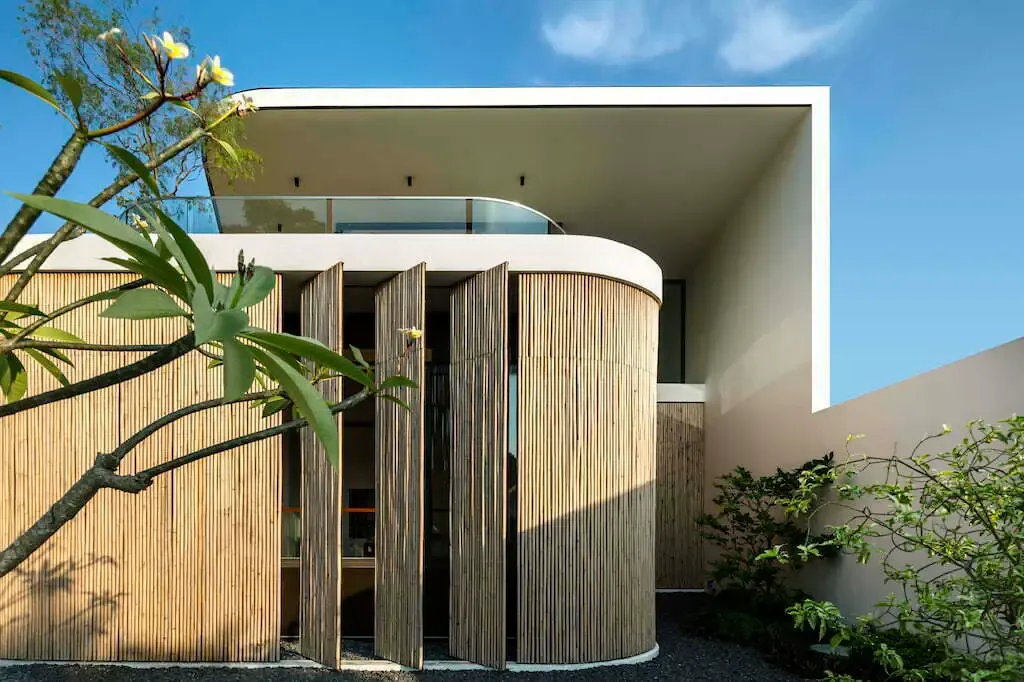
Not one to be confined by traditional design and structures, Realrich Sjarief from RAW Architecture created a whimsical, dreamscape design for a residence in Indonesia that challenges conventional architectural categories and expectations. The design separates the steel plane truss roof structure and uses thousands of bamboo poles to make up a three-storey building, creating composition that appears simultaneously organic and constructed, natural yet clearly intentional.
The hero of this project is the curved facade, featuring multiple columns of bamboo, some fanning out towards the sky in cathedral vault style that evokes sacred architecture while remaining clearly contemporary in execution. This religious architecture reference proves intentional, as cathedral spaces traditionally inspire awe through material expression and spatial volume—qualities this residence achieves through bamboo rather than stone.
The curved nature of this design is replicated inside, which is also made entirely of bamboo, creating spatial and material continuity between exterior and interior that dissolves conventional inside-outside boundaries. Inhabitants experience immersion in bamboo environment where the material becomes total architectural expression rather than applied finish.
The project demonstrates bamboo's capacity for dramatic formal expression when designers approach it with ambition matching its material capabilities. The thousands of poles required represent substantial material investment and complex installation coordination, yet the resulting architecture justifies this effort through creating genuinely unique spatial experience impossible with conventional materials.
The experimental approach also generates technical knowledge applicable to future projects. Understanding how to curve bamboo poles consistently, how to connect them structurally while maintaining desired aesthetics, and how to weather-protect large bamboo installations advances collective understanding that benefits the broader bamboo design community.
The use of pole bamboo in screening and fences has been popular for decades across Asia, however, now the full extent of its design possibilities are beginning to be explored by architects recognizing that screening serves multiple functions beyond simple privacy provision. Wallflower Architecture + Design have recently used pole bamboo screening as a beautiful functional design element to wrap around a residential abode in Singapore, transforming defensive boundary treatment into positive architectural feature.
Not only is bamboo screening adaptable for Singapore's tropical climate with its durability in high-humidity conditions and resistance to the intense UV radiation that degrades many materials, but by using it in this way, the residents reap the benefits of filtered light and airflow during the day, and stylish privacy at night. The semi-transparent quality allows breezes to ventilate naturally while blocking direct views that would compromise privacy.
The screening's thermal performance also matters significantly in tropical climates where solar heat gain drives cooling energy consumption. By shading building envelopes before sun reaches walls and windows, external screening dramatically reduces heat gain compared to internal blinds or curtains that allow heat to penetrate building thermal envelopes before blocking light.
The bamboo pole screening creates dynamic facade articulation through shadow play changing throughout the day as sun angles shift. This temporal dimension makes facades engaging rather than static, rewarding continued attention with evolving visual experiences. At night, interior lighting filters through screening, creating lantern-like effect that animates facades and contributes to streetscape quality.
The natural material also ages gracefully, developing silver-grey patina that many designers find more attractive than original golden tones. This graceful aging distinguishes natural materials from synthetic alternatives that often appear pristine initially but degrade unattractively over time.
Traditionally bamboo has been used to create low-cost homes in mainly rural areas, and recently high-end designs at the luxury market's other end, however, Malaysian architect Eleena Jamil believes bamboo should be seen as "modern and everyday construction material just like bricks, steel or concrete" rather than relegated to extremes of emergency housing or experimental luxury projects.
Her proposal is to use bamboo to build permanent and comfortable contemporary homes in suburban areas by incorporating bamboo into the entire structure of her bamboo terrace homes—a middle-market application that could dramatically expand bamboo's construction impact. This includes using it for load-bearing walls, balconies, and roofing in an aesthetically pleasing and economical way that makes bamboo construction accessible to middle-class families.
This democratization proves crucial for bamboo achieving its environmental impact potential. If bamboo remains niche material for experimental projects or premium installations, its total market share and consequent environmental benefit remains limited. Mainstream adoption in middle-market housing would consume vast material quantities, creating the scale necessary for supply chain development and workforce training.
Jamil's work necessarily involves substantial technical validation demonstrating bamboo's performance in structural applications to building authorities accustomed to conventional materials. Load testing, durability assessment, connection engineering, and compliance documentation all require rigorous development before bamboo structural systems gain regulatory acceptance.
This technical work benefits the entire bamboo construction movement by establishing precedents, developing engineering methodologies, and creating documentation that subsequent projects can reference. Each successful approval makes future approvals incrementally easier as certifiers build familiarity with bamboo properties.
Despite varying dramatically in scale, function, and aesthetic character, several common principles connect these projects and suggest broader lessons for architects considering bamboo applications.
Each project celebrates bamboo's inherent characteristics rather than attempting to disguise the material or make it mimic other materials. The pole forms remain recognizable, the natural colour and texture express clearly, and the construction logic appears evident rather than concealed. This material honesty creates authenticity that resonates with contemporary values around transparency and environmental responsibility.
The projects demonstrate that functional requirements and aesthetic aspirations need not conflict but can reinforce each other when designers approach problems holistically. The Bangkok salon ceiling provides spatial definition while creating atmosphere. The Singapore screening addresses climate, privacy, and architectural expression simultaneously. Jamil's terrace homes deliver structural performance and aesthetic quality together.
While all featured projects occur in Asian contexts where bamboo has cultural familiarity, the design approaches demonstrate principles applicable globally. Ceiling installations, experimental facades, climate-responsive screening, and structural applications all translate to other contexts when designers understand local climates, building cultures, and regulatory frameworks.
For architects inspired by these innovative bamboo applications, several practical steps support exploration of similar approaches in their own projects, whether in Asia, Australia, or elsewhere.
Develop deep understanding of bamboo's specific characteristics—its strength-to-weight ratio, flexibility, durability, dimensional stability, and aesthetic qualities. This knowledge enables design decisions that work with rather than against material properties, creating solutions that perform reliably while expressing bamboo's unique character.
Involve bamboo suppliers early in design development to benefit from their material expertise and fabrication capabilities. Suppliers who have executed complex bamboo installations can advise on feasibility, suggest detailing approaches, and identify potential challenges before they become expensive problems discovered during construction.
Adapt bamboo applications to specific climate conditions and cultural contexts rather than directly transplanting approaches from other regions. Singapore's tropical humidity differs dramatically from Australia's varied climate zones, requiring different material treatments, connection details, and maintenance approaches.
While the experimental projects featured here demonstrate bamboo's potential for dramatic architectural expression, not every project requires or benefits from such ambition. Sometimes the most effective bamboo application involves straightforward screening, flooring, or cladding that performs reliably while advancing sustainability goals.
To explore how bamboo might enhance your projects through ceiling treatments, screening, structural elements, or other applications, visit our showrooms in Sydney and Brisbane where products and installations demonstrate bamboo's versatility at architectural scale. Our poles collection provides the organic bamboo featured in these international projects, while our engineered products offer additional options for applications requiring dimensional consistency.
Contact our Design Consultants to discuss project-specific applications, receive technical guidance, and access case studies demonstrating bamboo performance across diverse contexts. Order samples to assess bamboo's physical qualities in your specific design context.
Traditional materials meet modern design most successfully when architects understand both tradition and modernity deeply, respecting accumulated knowledge while pushing toward new possibilities. The projects featured here illuminate pathways forward for bamboo in contemporary architecture.