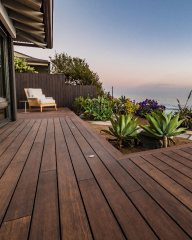
Three things you never knew about bamboo decking: It's a composite decking, but with no plastics. It has a 25-year warranty. And it's harder than hardwood. No wonder our stunning Dasso bamboo decking was chosen for the City of Sydney's Smart Green Apartments Programme, which is designed to improve the cost-effectiveness and environmental performance of apartment buildings. The beautiful rooftop garden upgrade at The Pyrmont showcases what happens when environmental performance, durability, and aesthetic quality align perfectly.

Three things you never knew about bamboo decking: It's a composite decking, but with no plastics. It has a 25-year warranty. And it's harder than hardwood. No wonder our stunning Dasso bamboo decking was chosen for the City of Sydney's Smart Green Apartments Programme, which is designed to improve the cost-effectiveness and environmental performance of apartment buildings. The beautiful rooftop garden upgrade at The Pyrmont showcases what happens when environmental performance, durability, and aesthetic quality align perfectly.
The City of Sydney's Smart Green Apartments Programme represents a progressive approach to improving existing residential building stock rather than focusing exclusively on new construction standards. The programme provides funding and technical support to help apartment buildings implement upgrades that simultaneously reduce environmental impact and improve resident amenity. This dual focus recognises that successful sustainability initiatives must deliver tangible benefits to building occupants, not just abstract environmental metrics.
The programme targets cost-effectiveness alongside environmental performance, acknowledging that apartment buildings operate under budget constraints that can make purely idealistic upgrades financially unfeasible. Materials and systems must demonstrate reasonable payback periods through reduced operating costs, extended service lives, or avoided maintenance expenses. This practical framework ensures programme funds support genuinely viable improvements rather than experimental approaches unlikely to be replicated.
For the rooftop garden upgrade at The Pyrmont, the programme evaluated multiple decking options before selecting bamboo. The decision reflected comprehensive assessment of environmental credentials, lifecycle costs, durability expectations, maintenance requirements, and aesthetic outcomes. Bamboo's selection validates its performance across all evaluation criteria, not just environmental categories.
The term "composite" typically suggests plastic content, as most composite decking combines wood fiber with recycled HDPE or PVC. Our bamboo decking challenges this assumption, qualifying as composite through manufacturing technique rather than material composition. Understanding this distinction helps clarify bamboo's environmental advantages over conventional composites.
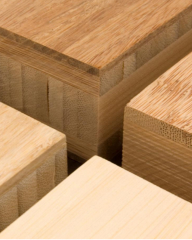
Dasso bamboo decking uses strand-woven construction where bamboo fibers are compressed under extreme pressure with natural adhesives, creating material denser and harder than the original bamboo culms. This process resembles composite manufacturing conceptually—combining smaller elements into unified product with superior properties—while using exclusively natural materials rather than introducing plastics.
The manufacturing begins with splitting mature bamboo culms into thin strips. These strips are further processed into individual fibers, which are then compressed under pressures exceeding 3,000 PSI while heat-cures natural resin binders. The result is material with Janka hardness ratings approximately twice that of popular hardwood decking species, achieved without any plastic reinforcement.
The plastic-free composition addresses growing concerns about composite decking's environmental impacts. Conventional composites shed microplastics as they weather, contributing to pollution increasingly recognised as serious environmental threat. These microscopic particles enter stormwater systems, eventually reaching waterways where they persist indefinitely and enter food chains.
Natural bamboo decking generates no microplastics. Material loss from weathering consists of organic compounds that biodegrade naturally rather than persisting as permanent pollutants. For programmes like Smart Green Apartments prioritising genuine environmental improvement, this distinction matters significantly when evaluating material sustainability comprehensively.
The end-of-life advantages also prove substantial. Conventional composite decking's mixed material composition prevents recycling, meaning old boards typically go to landfill where plastic components persist indefinitely. Bamboo decking can be repurposed, mulched, or composted, returning organic material to natural cycles rather than creating permanent waste.
The 25-year warranty represents more than manufacturer confidence in product durability. For apartment buildings, warranty length directly affects lifecycle cost calculations, maintenance planning, and capital reserve requirements. Understanding warranty implications helps explain why strata committees increasingly specify long-warranty materials despite potentially higher initial costs.
Apartment buildings operate on tight budgets where major replacements require special levies or deplete capital reserves accumulated for emergency repairs. A decking material lasting 25 years with minimal maintenance costs substantially less over its lifecycle than cheaper alternatives requiring replacement every 10-15 years.
The warranty also reduces financial risk for strata committees making material decisions. If premature failure occurs, warranty coverage protects the building's capital reserves from unexpected replacement costs. This risk mitigation proves particularly valuable for buildings with limited financial buffers or risk-averse committee members concerned about imposing unexpected costs on residents.
Beyond replacement costs, maintenance expenses significantly impact long-term building budgets. Materials requiring annual oiling, periodic sealing, or frequent cleaning consume funds that could address other building needs. Bamboo decking's minimal maintenance requirements—essentially just occasional sweeping and allowing rain to provide natural cleaning—eliminate these ongoing expenses.
For The Pyrmont rooftop garden, the maintenance savings prove particularly valuable. Rooftop access requires coordinating with residents, potentially disrupting units below during maintenance work. Materials eliminating this maintenance reduce both direct costs and coordination hassles, improving resident satisfaction while reducing strata management workload.
The claim that bamboo is "harder than hardwood" sounds paradoxical given bamboo's hollow culm structure and relatively fast growth. Understanding how strand-woven manufacturing achieves extreme hardness helps architects appreciate the engineering behind this performance achievement.
The Janka hardness test measures force required to embed an 11.28mm steel ball halfway into material, providing standardised comparison across wood species. Popular Australian hardwood decking species like Merbau rate around 1,800-1,900 pounds-force. Spotted Gum and Blackbutt range from 2,000-2,200 pounds-force.
Dasso strand-woven bamboo decking achieves Janka ratings exceeding 4,000 pounds-force, more than double many hardwood alternatives. This extreme hardness results from compression manufacturing where bamboo fibers pack far more densely than they occur in natural culm walls. The process essentially concentrates bamboo's inherent hardness while eliminating the hollow interior space that reduces natural bamboo's overall density.
This exceptional hardness translates to real-world durability advantages. The decking resists denting from dropped objects, scratching from furniture movement, and general wear from foot traffic. For rooftop communal spaces experiencing diverse use patterns—residents gardening, entertaining, exercising, or simply relaxing—this wear resistance maintains appearance despite demanding service conditions.
The hardness also contributes to splinter resistance, a safety consideration for barefoot use common in Australian indoor-outdoor living. Softer decking materials can develop splinters as they age, creating hazards particularly concerning for children. Bamboo's density and hardness resist this splintering tendency, maintaining smooth, safe surfaces throughout its service life.
Landscape architects Adam Robinson and Hamish Chapman, working with Strata Committee Members John Tate, Allan Hoy, and Patrick Fernandez, transformed an underutilised rooftop into valuable amenity space enhancing resident quality of life while improving building environmental performance. The project demonstrates how thoughtful material selection supports multiple objectives simultaneously.
The rooftop garden reduces building cooling loads by shading the roof surface, reducing heat island effects, and providing evaporative cooling through plantings. The bamboo decking contributes to these environmental benefits while adding its own sustainability credentials: rapid renewable resource, carbon sequestration during growth, plastic-free construction, and biodegradable end-of-life characteristics.
The project also improves stormwater management. The rooftop garden absorbs and filters rainfall that would otherwise run directly to stormwater systems, reducing peak flow rates and improving water quality. These benefits support City of Sydney's broader goals around urban water management and green infrastructure development.
Beyond environmental metrics, the project substantially improves resident amenity by creating accessible outdoor space where none existed functionally before. Urban apartment living often suffers from limited private outdoor access, making quality communal outdoor spaces particularly valuable for resident wellbeing and building attractiveness.
The bamboo decking creates comfortable surfaces for barefoot use, furniture placement, and diverse activities. Its natural warmth feels more inviting than concrete or tile alternatives, encouraging residents to actually use the space rather than viewing it as merely decorative. This utilisation represents project success beyond completion photos—creating spaces people genuinely inhabit and enjoy.
The Smart Green Apartments Programme's success depends partly on creating demonstration projects that other buildings want to replicate. If upgrades look good, perform well, and prove cost-effective, neighbouring buildings pursue similar improvements, multiplying programme impact. Material selections that deliver across all dimensions—environmental, financial, aesthetic, and functional—prove more influential than those excelling in single categories.
The Pyrmont project demonstrates that environmental improvements don't require sacrificing quality or accepting inferior aesthetics. The bamboo decking looks beautiful, performs reliably, and costs reasonably over its lifecycle despite initial costs potentially exceeding budget alternatives. This comprehensive success makes the project more influential as demonstration, encouraging other strata committees to pursue ambitious rather than minimal upgrades.
Projects succeeding across multiple dimensions also generate more positive word-of-mouth among building managers, strata committees, and landscape architects. These professional networks significantly influence material specification patterns, with successful projects creating momentum that accelerates adoption beyond individual installations.
Programme material selections also signal City of Sydney's priorities around sustainability, influencing broader industry practices beyond directly funded projects. When government programmes explicitly favour plastic-free, long-lifecycle, genuinely sustainable materials, manufacturers and suppliers respond by developing and promoting products meeting these criteria. This market influence amplifies programme impact beyond its direct budget.
The Pyrmont success offers several insights for architects, landscape architects, and strata committees considering similar rooftop upgrades or outdoor space improvements in multi-unit residential buildings.
Material evaluation should consider full lifecycle costs rather than just initial purchase prices. The 25-year warranty and minimal maintenance requirements shift bamboo's cost-benefit calculation substantially compared to shorter-lived alternatives requiring periodic refinishing or earlier replacement. Capital reserve planning should account for these lifecycle differences.
Projects delivering multiple benefits—environmental performance, resident amenity, building value enhancement—prove easier to fund and generate more satisfaction than single-purpose improvements. The rooftop garden improves cooling performance, stormwater management, biodiversity, resident wellbeing, and building attractiveness simultaneously. This multi-benefit approach justifies investment more compellingly than environmental improvements alone.
Natural materials create more positive resident responses than synthetic alternatives, even when performance metrics appear similar. People respond to authentic material presence in ways that specifications don't capture. The warmth of bamboo underfoot, its natural variations, and its graceful aging contribute to space quality beyond functional performance, affecting whether residents actually use communal spaces or avoid them.
For Sydney apartment buildings interested in pursuing similar upgrades, the Smart Green Apartments Programme provides both funding and technical support. Programme staff help buildings identify appropriate improvements, develop project scopes, source qualified contractors, and navigate approval processes. This comprehensive support reduces barriers that might otherwise prevent strata committees from pursuing ambitious sustainability upgrades.
Beyond programme funding, the demonstrated success at The Pyrmont provides precedent that buildings can reference when proposing bamboo decking or similar improvements. Strata committees often hesitate to specify unfamiliar materials without proof of performance; completed projects like this reduce perceived risk by showing successful outcomes.
To see and feel the bamboo decking selected for the Smart Green Apartments Programme, visit our Sydney showroom where samples and full-scale installations demonstrate material quality and performance characteristics. Touch the surface understanding why residents appreciate barefoot comfort. Examine the grain patterns and natural variations that make each installation unique.
Order samples for your projects, whether rooftop gardens, ground-level decks, or other outdoor applications. Contact our technical team for project-specific guidance on appropriate products, installation requirements, and maintenance expectations. Review our projects gallery for additional examples of bamboo decking across varied applications and contexts.
The Smart Green Apartments Programme's selection validates bamboo decking across environmental performance, lifecycle costs, durability, and aesthetic quality. Whether pursuing programme funding or independent upgrades, consider materials that genuinely deliver comprehensive benefits rather than compromising across competing priorities. Experience why Sydney's leading sustainability programme chose bamboo for one of its showcase projects.